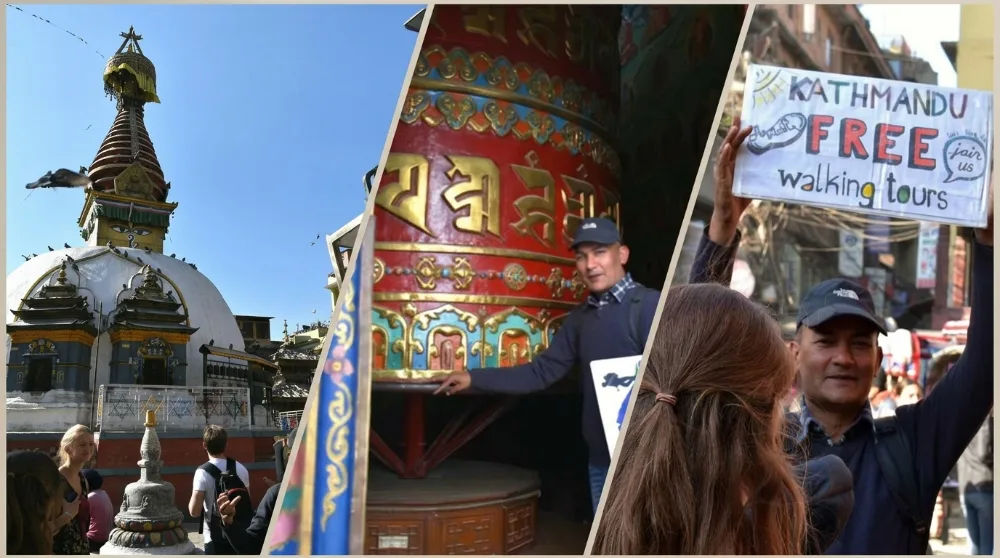
To understand what you're walking through today, you need to know what this city once was.
Between 1968 and 1975, Kathmandu became the ultimate destination for a generation of Western youth searching for something they couldn't find at home. They came by land, overland from Europe through Turkey, Iran, Afghanistan, Pakistan, and India, the legendary "Hippie Trail," and Kathmandu was where the road ended. As one writer put it, Kathmandu was "as far out as it was far away."
This wasn't just a few backpackers. Between 1968 and 1970, Nepal's annual tourist arrivals doubled, and the average age of visitors dropped from elderly to young. They called it "Kathmandu or Bust." The city became known as "the Mecca of Hippiedom," "the Amsterdam of the East," and "the capital of the Aquarian Age."
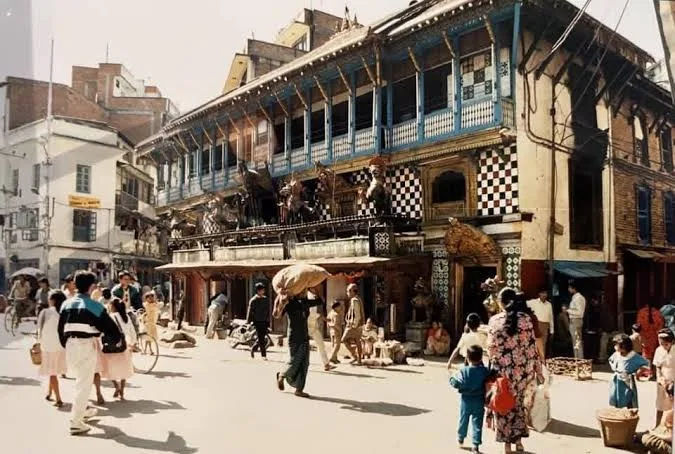
And the center of it all was Freak Street, officially Jhochhen Tole, just south of Kathmandu Durbar Square. In those years, Nepal's government actually ran licensed hashish shops. Hippies arrived in search of legal cannabis, but they found something more: a place where their countercultural dreams could survive even as they faded in the West. Direct bus services ran from the airport to Freak Street, targeting the young travelers with long hair and love beads.
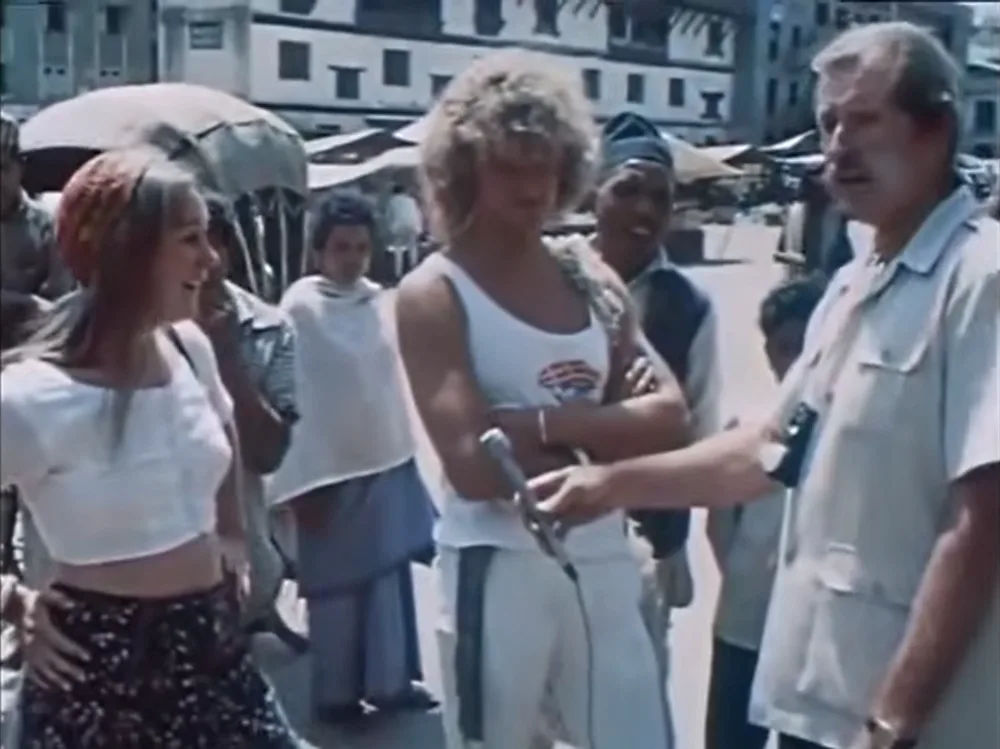
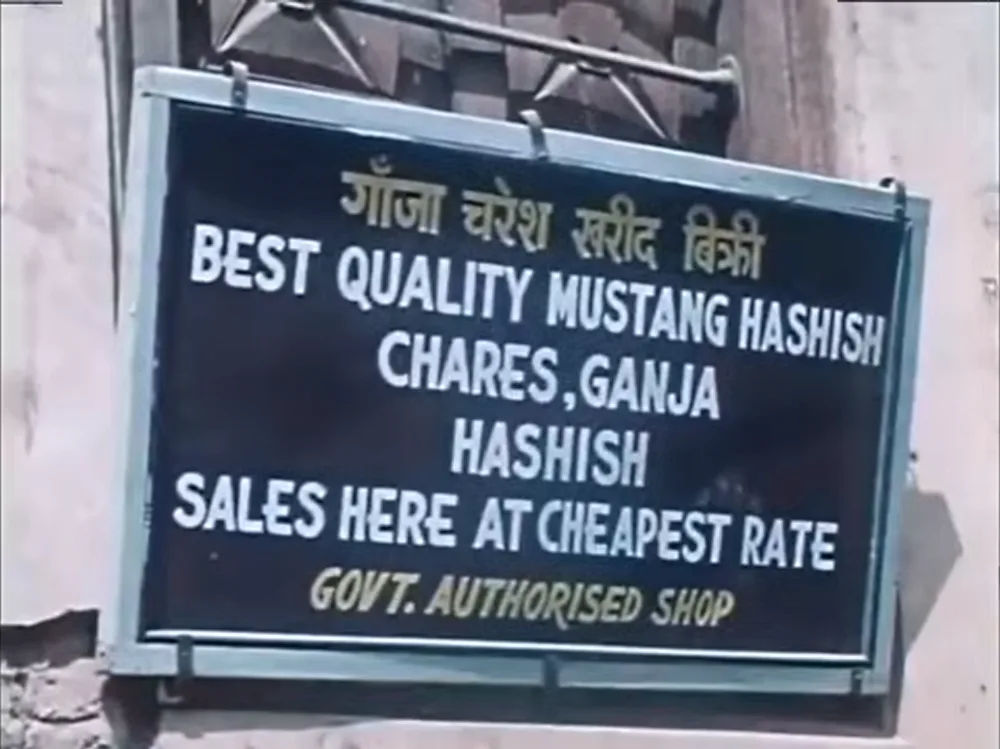
Cat Stevens wrote some of his biggest hits sitting in a tea shop in the old city in 1969. Richard Alpert, Timothy Leary's Harvard colleague, found spiritual awakening in a Kathmandu noodle shop, became Baba Ram Dass, and wrote Be Here Now, one of the defining books of the era. The Beat poet Gary Snyder had passed through years earlier. Zina Rachevsky, a Russian princess turned Hollywood actress turned Buddhist nun, was setting up what would become Kopan Monastery.
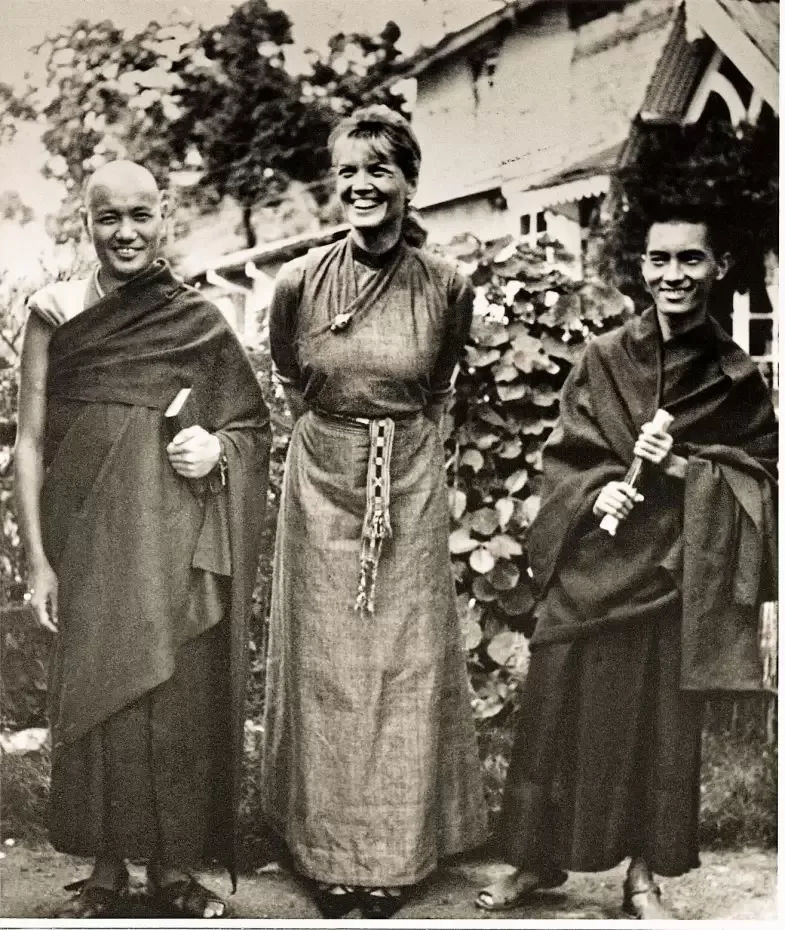
By the late 1970s, it was over. Under pressure from the United States, Nepal cracked down on the hippie scene, banned cannabis, and deported many of the long-haired foreigners who had made the city their home. The hippies who remained moved west to Pokhara. Freak Street went quiet. Thamel, a new tourist district designed for trekking and adventure tourism, sprang up specifically to distance itself from the 1960s ethos.
Today, Freak Street is just another old Kathmandu street. The cafes that once served hashish with your tea have either closed or gone straight. Aunt Jane's, a hippie landmark, is now New Aunt Jane's and focuses on vegetarian food. But walk through it with someone who knows the stories, as you would on a free walking tour, and you can still feel the ghost of that extraordinary era.
The Living City: What You'll Actually Walk Through
Walking the old city isn't just about monuments. It's about a city that has been continuously inhabited, traded in, and worshipped in for centuries, and still is.
Thahity Junction: The Stupa in the Square
Thahity is a small square that most visitors pass through without ever knowing its name. At its heart sits the Dharmadhaatu Stupa, a modest but spiritually significant monument around which daily life revolves. This is Kathmandu in miniature: ancient sacred architecture surrounded by vegetable sellers, porters, school children, and the ordinary chaos of a living city.
Thahity was also home to a legendary figure named Sancha Pahalman, a wrestler of almost mythical strength who, according to local lore, once separated two fighting bulls that had blocked the Asan junction for two full days by grabbing their horns and holding them apart until they gave up. He trained wrestlers in the akhadas (traditional wrestling gyms) of the old city, and his story is still told by locals who grew up hearing it from their parents.
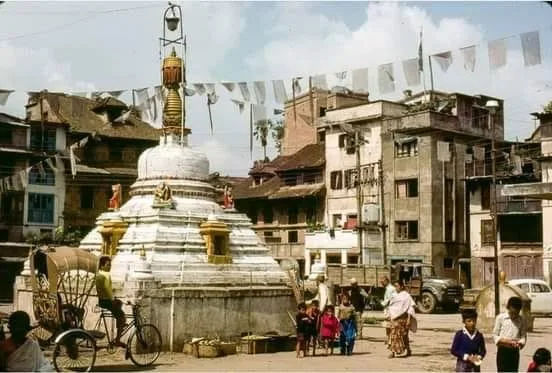
Shree Gha Bihar: A Sanctuary Hidden in Plain Sight
Just a short walk from the busy streets of Thamel, tucked down a quiet alley, is Shree Gha, also known as Kathesimbhu Stupa or Shree Gha Chaitya. Built in the 17th century, this Buddhist stupa is a smaller replica of the famous Swayambhunath, with its white dome, gilded spire, and the all-seeing eyes of Buddha watching over the square.
What makes Shree Gha special isn't just its architecture, it's the way it functions. Unlike the major tourist sites, Shree Gha remains a genuine community space. Locals come to pray, spin the prayer wheels, and participate in ceremonies and festivals that keep Buddhist traditions alive. The square is often filled with pigeons, and the atmosphere is peaceful in a way that feels almost impossible given how close you are to the chaos of Thamel.
Research on Kathmandu's historic courtyards shows that Shree Gha has managed to balance its monastic, educational, and residential functions better than most. While other courtyards have degraded under urban pressure, Shree Gha has maintained its religious activity, community use, and spatial layout, making it one of the most balanced examples of a traditional Newari Buddhist courtyard still functioning in the modern city. The guthi system, traditional community trusts that manage religious and cultural practices, remains semi-active here, keeping rituals and festivals alive.
You can sit here with a cup of chai, watch the locals go about their devotions, and understand why this spot has been a spiritual center for centuries.
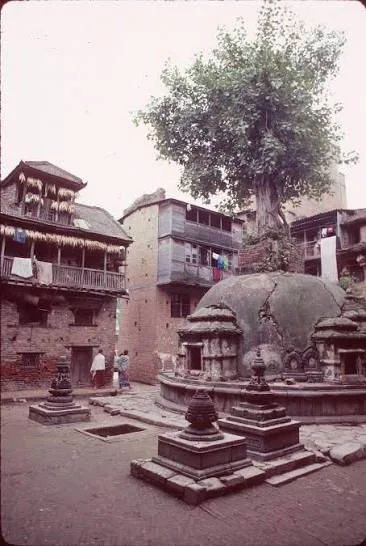
Asan Market: The Beating Heart of Old Kathmandu
If there's one place that captures the essence of old Kathmandu, it's Asan Tole. This bustling market square sits at the nexus of six streets that were once part of the ancient trade route between India and Tibet. Today, it's still one of the city's primary markets, where you can find everything from spices and dried fish to plastic toys and hardware.
Asan has a legend attached to its name. According to local lore, a fish once fell from the sky during a heavy rainstorm. As word spread, visitors would ask where it fell, and locals would reply "ansaa," meaning "just there" or "nearby" in Newari. The spot is now marked by the Nyālon, a small shrine dedicated to a fish, hiding in plain sight among the market stalls.
The demographic makeup of Asan tells its own story. A survey from the late 1980s found that 95% of residents traced their ancestry to Kathmandu Newars, with the remaining population made up of Newars from Bhaktapur, Parbatiyas, and ethnic Tibetans. The shopkeepers were similarly dominated by Kathmandu Newars (85%), with smaller numbers of Tibetans, Parbatiyas, and Indians. This isn't a tourist market, it's a real one, serving real people, and has been for centuries.
Walking through Asan, whether on your own or as part of a free walking tour, means you'll notice things you'd otherwise miss: which temple gets fresh marigolds every morning, which shopkeeper's family has run the same stall for three generations, which alley leads to a hidden courtyard where a community still gathers for festivals.
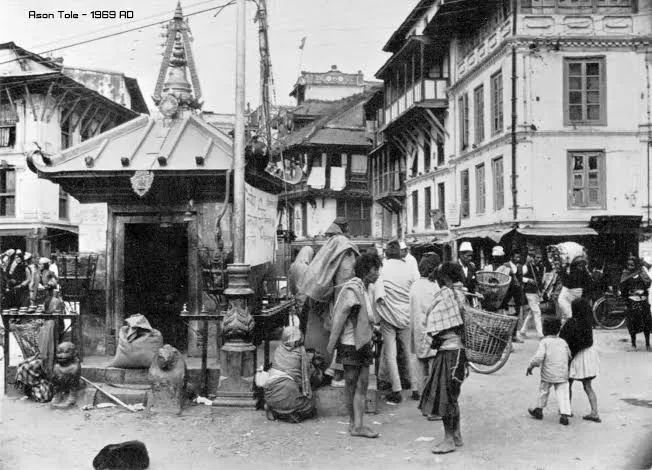
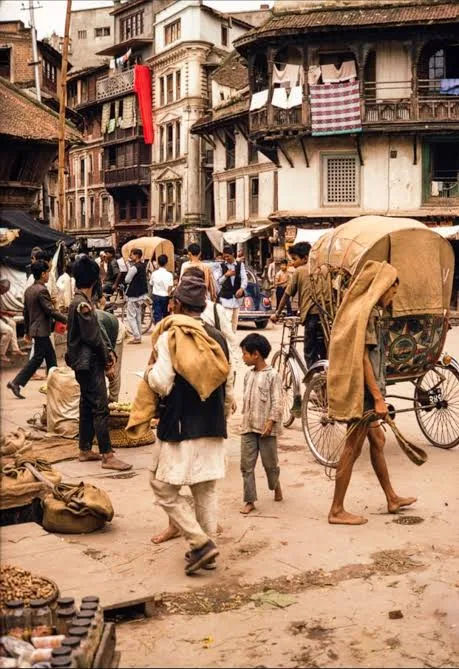
Indrachowk: Where the Money Changed Hands
Indrachowk was the commercial heart of the valley for centuries. During the Lichchavi period and long after, this was where traders, laborers, and lahures (Nepali soldiers who had served abroad) came to exchange money. The sarafi shops, money changers, were the only ones handling currency exchange, and business wasn't done until you reached Indrachowk.
Every house here had a shop on the ground floor and a residence above. Clothing came from India, while woolen cloth, pottery, and metalware arrived from Tibet. Wholesalers in Indrachowk bought cloth woven by locals in Kirtipur and Lubhu, and goods traveled by porter, six or seven days from Birgunj to Kathmandu, then onward to Pokhara, Gorkha, or Palpa. There were no phones, no easy communication. Business ran on trust. Wholesalers would lend goods to small traders, and a father might walk twelve or fifteen days to collect a loan.
Today, Indrachowk is still a market, but it's also a ceremonial square. Six streets meet here, and during festivals like Indra Jatra, the chariots of Kumari, Ganesh, and Bhairav are pulled through. The Akash Bhairav temple, with its large mask of the "god of the sky," dominates the western side. And tucked into a nearby alley is the Pote Market, where glass bead necklaces called pote, worn by married Brahmin and Chhetri women, have been made and sold for over 350 years. The Muslim traders of this market, known as Newa Muslims, have lived alongside their Hindu neighbors for generations, sharing festivals and maintaining harmony through centuries of change.
What the Old City Still Holds
The Kathmandu you walk through isn't a museum. It's a living place, and the old ways are still visible if you know where to look.
The traditional courtyard system, the bahals and bahis that structure Newari urban life, still shapes how people live. Shree Gha, Itum Bahal, and Te Bahal are among the most studied, and their differences are telling. Shree Gha has maintained its spiritual and educational functions most successfully, while others have degraded under urban pressure. The guthi system, that ancient form of community trust that manages festivals and rituals, is still active in some courtyards and semi-active in others.
In Asan, you can still see the fish stone, the Annapurna temple where grain sellers must offer a portion of their goods to the goddess of abundance, and the Ganesh shrine that watches over the intersection. In Indrachowk, the Pote Market still glitters with beads, even as the business declines and artisans worry about the future. On Freak Street, the ghosts of the hippie era linger in the architecture and the occasional stray traveler who came decades ago and never quite left.
Why Walk With a Local Guide
You could wander these streets alone. Many people do. But you'd miss almost everything.
A local guide knows which courtyard is still used for daily worship, which tea shop has been run by the same family for generations, which alley leads to a hidden stupa that isn't in any guidebook. They know the stories behind the stones, the wrestler who fought bulls, the fish that fell from the sky, the princess who became a nun. They can translate not just the language but the culture, explaining why that shopkeeper offers the first handful of rice to the temple, why those prayer flags are tied to that particular tree, why that old man sits in the same spot every morning.
This is the kind of experience that turns a walk into a memory. Not the summit. Not the photo. The people, the stories, the moments you couldn't have planned. And it's exactly what a good free walking tour is designed to give you, not a rehearsed script, but a real introduction to a city from someone who actually lives there.

Practical Information
Where: The walk typically starts from the Garden of Dreams in Thamel and winds through Thahity, Shree Gha, Asan, Indrachowk, and other old city neighborhoods.
Duration: About 4 hours.
What to bring: Comfortable walking shoes (the streets are uneven cobblestone), weather-appropriate clothing, water, a camera, and some cash for snacks or souvenirs along the way.
Booking: If you'd like to join the free walking tour, you can reserve directly through Himkala Adventure's Facebook page, WhatsApp (+977 9841376470), or email (himkalaadventure@gmail.com). The walk runs on a regular schedule regardless of weather or group size.
The City That Stays With You
Most travelers come to Nepal for the mountains. They pass through Kathmandu quickly, a night before the trek, a night after, and leave without ever really seeing it. That's a loss.
The old city of Kathmandu is one of the most extraordinary places on earth. It's a place where a 17th-century Buddhist stupa sits in a square full of pigeons and prayer wheels, where a 350-year-old bead market still operates in the same alley where it began, where the ghost of the hippie era lingers on a street that once drew seekers from across the world. It's a city that has been continuously lived in, traded in, and worshipped in for centuries, and it still works the way it always has.
Walking through it with someone who knows it, someone whose family has been part of these streets for generations, isn't just sightseeing. It's an introduction to a way of life that has survived empires, earthquakes, and the relentless pressure of modernity.
The mountains will always be there. But the old city of Kathmandu, in all its messy, living, contradictory glory, is something you have to walk through to understand.