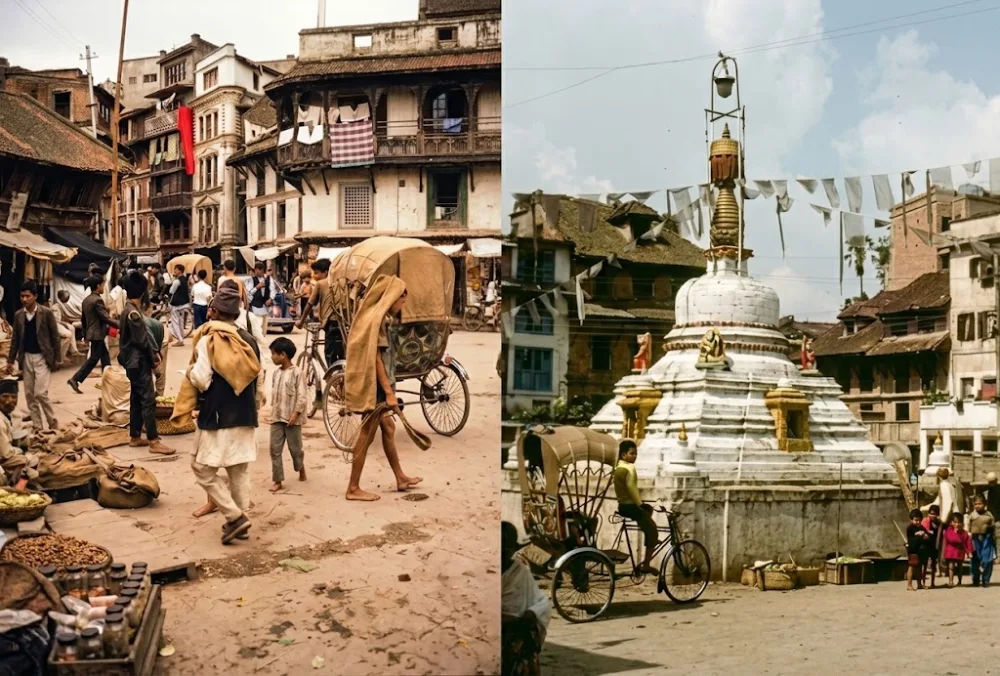
Choose Patan if you're short on time, love art and architecture, or want something you can see properly in half a day without rushing.
Choose Bhaktapur if you want to step into a fully preserved medieval city, don't mind paying more, and are willing to give it a full day, or better, a night.
If you have two days, do both. They're close enough, and they tell different halves of the same story.
Patan: The City of Fine Arts
Patan sits just across the Bagmati River from Kathmandu, close enough that it feels like an extension of the capital rather than a separate city. That proximity is part of its appeal, and part of what makes it feel less like an escape.
The moment you step into Patan Durbar Square, the word that comes to mind is refinement. The square is smaller than Bhaktapur's, more contained, and the craftsmanship on display is astonishing. The Krishna Mandir, built entirely of stone in the 17th century, is the centerpiece, its walls covered in carvings that tell stories from the Ramayana and Mahabharata. Unlike the brick-and-wood temples around it, the Krishna Mandir feels almost Indian in its aesthetic, a reminder that Patan was always a trading city with connections that stretched far beyond the valley.
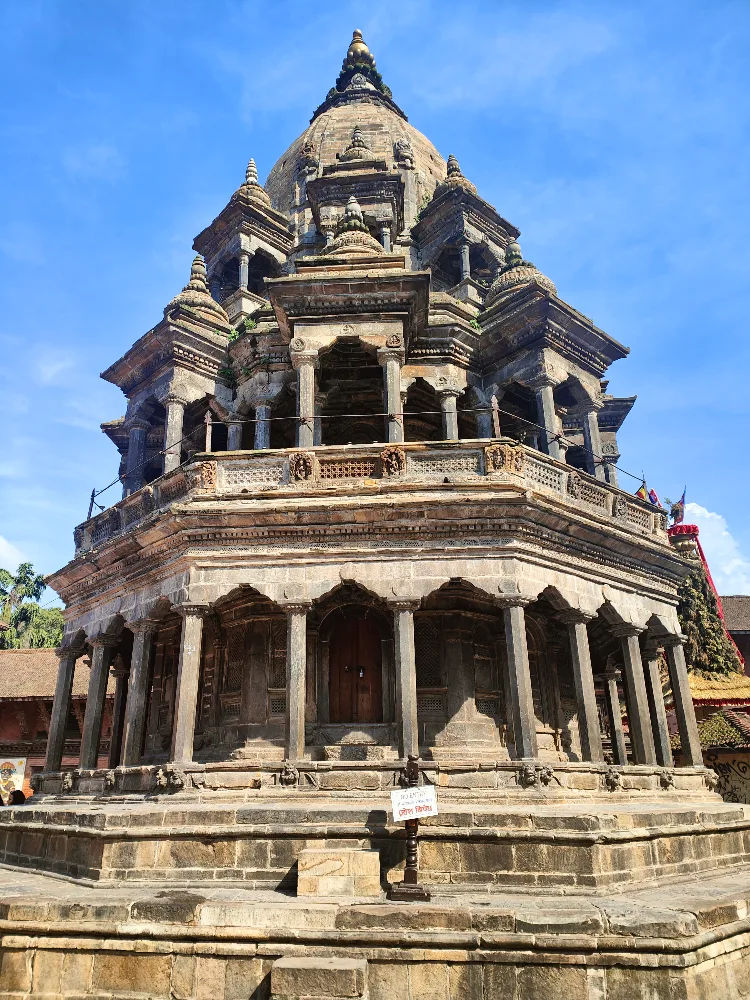
Then there's the Patan Museum, housed in the old royal palace. Many travelers skip it, which is a mistake. The collection of bronze and metalwork is one of the finest in South Asia, and the building itself, with its courtyards and restored interiors, is worth the visit alone. Your ticket to the square includes the museum, so there's no excuse.
The Story of the Flame in the Water
Patan's origins are wrapped in legend. Local myth holds that a small river once flowed along what is now the palace front, it still runs underground, channeled into drains since the Malla period. On its bank stood a Buddhist monastery, built where a bright flame had miraculously emerged from the water. When the palace was later expanded, the monastery was moved, but the memory of that flame never left. Every year during Gunla, the holy month of August and September, a Buddha image is immersed in consecrated water placed directly in front of the Golden Door, and the faithful come to worship.
That's Patan in a single image: a city where myth and daily ritual are still woven into the fabric of the streets.
What Patan Does Well
Patan is manageable. You can walk the square, visit the museum, wander into the Golden Temple a few minutes away, and still have time for a coffee on a rooftop overlooking the temples, all in half a day. It's the kind of place where you can feel like you've seen something without exhausting yourself. It's also less crowded than Bhaktapur. The square draws visitors, but it doesn't feel overrun. Locals still sit on the temple steps, kids play in the courtyards, and the rhythm of the city hasn't been entirely reshaped around tourism.
Where Patan Falls Short
If you're looking for the feeling of stepping into another century, Patan won't quite give you that. It's too close to Kathmandu, too integrated into the modern city. The traffic noise is never far away. The "medieval city" experience here is more of a beautiful pocket within a busy urban landscape than a complete immersion.
Bhaktapur: The Medieval Time Capsule
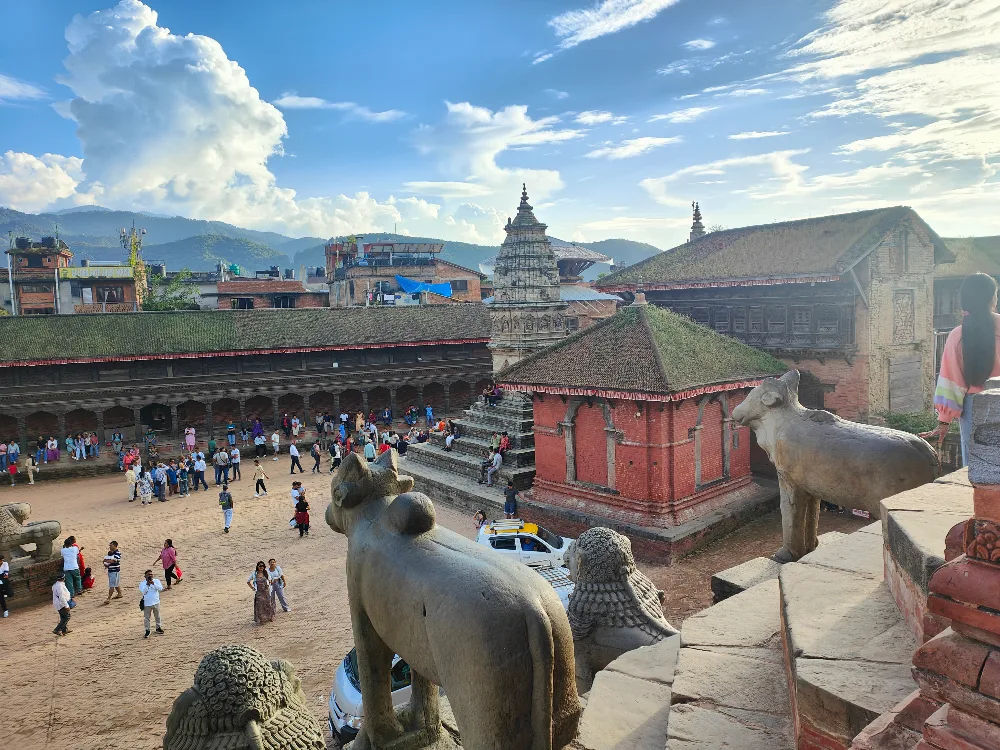
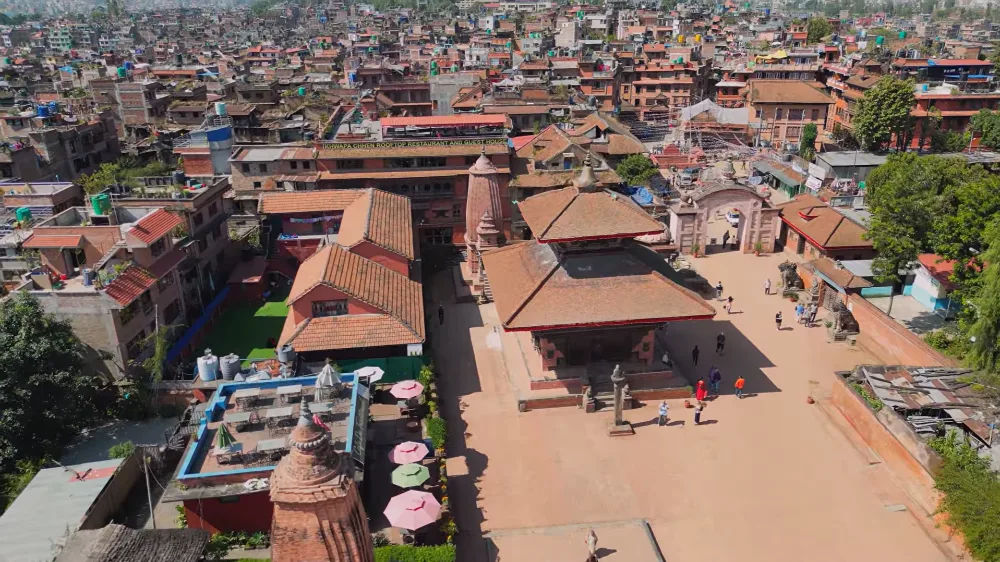
Bhaktapur is a different beast entirely. Twelve kilometers east of Kathmandu, it was once a separate kingdom, and it still feels like one. The old city is largely car-free, the streets are brick-paved, and the architecture is so densely preserved that walking through it feels less like sightseeing and more like time travel.
The entrance fee is steep, around 1,500 to 1,800 NPR for foreigners, depending on where you check. That's more than Patan's 1,000 NPR. But the ticket covers the entire old city, not just one square, and the money goes toward preserving a place that has survived earthquakes, neglect, and the relentless pressure of modernization.
The Temple That Towers Over Everything
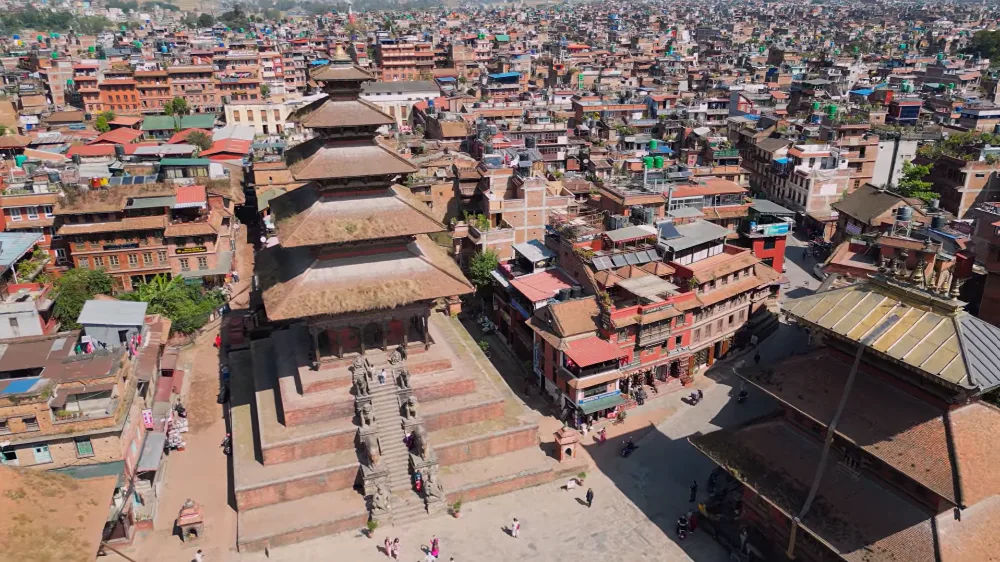
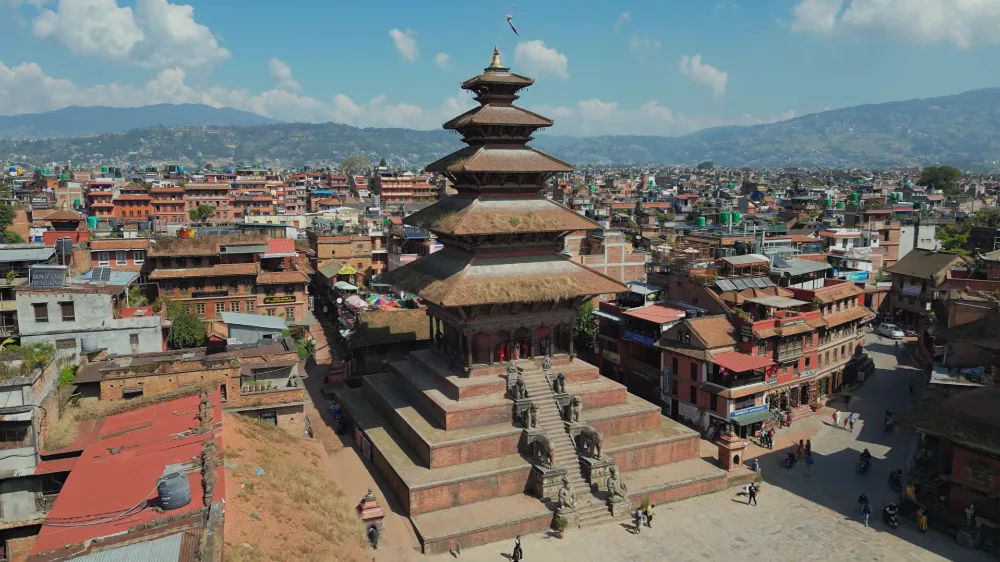
Nyatapola Temple is the icon of Bhaktapur, and for good reason. Five tiers tall, it's the tallest temple in Nepal, and its stone stairway is flanked by pairs of guardians, wrestlers, elephants, lions, griffins, and goddesses, each said to be ten times stronger than the one below. Climb to the top and the whole city spreads out beneath you, a sea of brick and tile and carved wood.
But Nyatapola isn't just an architectural marvel. It's a statement. The temple was built in the early 18th century by King Bhupatindra Malla, a ruler who seems to have understood that a city's greatness isn't measured only in palaces but in the devotion and ambition of its public monuments.
The Story of Bhairavi's Head
Near Nyatapola stands the Temple of Bhairavi, and its legend is one of the strangest in the valley. According to local lore, the goddess Bhairavi once came to Bhaktapur to watch the Bisket festival, disguised as an ordinary person. A clever Tantric saw through the disguise and bound her with spells. Trapped and unable to escape, Bhairavi began sinking into the earth. Before she could disappear completely, the Tantric cut off her head and installed it in the temple. That is how Bhairavi remained in Bhaktapur.
Whether you believe the story or not, it tells you something about how this city understands its gods: not as distant figures in the sky, but as beings who walk among mortals, get tricked, and sometimes lose their heads.
Pottery Square and the Living Crafts
Bhaktapur isn't just monuments. Pottery Square is exactly what it sounds like: a working square where potters spin clay on wheels and rows of finished pots dry in the sun. This isn't a demonstration for tourists. It's a craft that has been part of the city's identity for centuries, and it's still happening.
If you have time, you can take a pottery class with local artisans. Shaping a pot on the wheel in a city that has perfected the craft over generations is a genuinely memorable experience, and a reminder that Bhaktapur's heritage isn't frozen in museums. It's alive.
Where Bhaktapur Wins
Bhaktapur gives you the complete package. The scale is larger, the atmosphere is more immersive, and the car-free streets make it possible to wander for hours without feeling like you're dodging traffic. It's the kind of place where you want to stay overnight, watch the square at dawn before the tour groups arrive, and eat juju dhau, the "king curd" that Bhaktapur is famous for, on a rooftop while the light turns golden.
Where Bhaktapur Falls Short
The entrance fee is higher. The crowds can be intense in the middle of the day. And if you're short on time, Bhaktapur can feel rushed, there's too much to see, and squeezing it into a half-day is a recipe for frustration.
Side by Side: The Practical Differences
Time needed. Patan: half a day is enough to see the square and museum properly. Bhaktapur: a full day, or an overnight if you want to experience it without the day-trippers.
Crowds. Patan is quieter and more local. Bhaktapur draws more tour groups, especially midday.
Cost. Patan: 1,000 NPR (includes museum). Bhaktapur: 1,500 to 1,800 NPR (covers the whole old city).
Atmosphere. Patan feels like a beautiful pocket within a modern city. Bhaktapur feels like a city that has somehow survived intact from another era.
Art and architecture. Patan wins on refinement and museum quality. Bhaktapur wins on scale and immersion.
Which One for Which Traveler?
The time-pressed traveler: Patan. You can see it properly in a morning and still make it back to Kathmandu for lunch.
The photographer: Both, but Bhaktapur at dawn is something special. The square before the crowds arrive, the soft light on the brick, the pigeons taking flight, it's worth the early start.
The history lover: Bhaktapur. The scale and preservation give you a fuller sense of what a medieval Newari city actually felt like.
The art lover: Patan. The museum, the Krishna Mandir, the courtyards, it's the valley's artistic heart.
The budget traveler: Patan is cheaper, but Bhaktapur's higher fee buys you a full day of exploration. If you can afford it, Bhaktapur is better value for the time you spend.
Can You Do Both in One Day?
Yes, technically. But I wouldn't recommend it unless you have no other choice.
The standard route is to start at Patan in the morning, when it's quiet, then take a taxi or local bus to Bhaktapur for the afternoon and sunset. It's doable, and some travelers manage it comfortably.
But here's the thing: Bhaktapur rewards slowness. Rushing through it to tick off a list defeats the purpose. If you only have one day and you want to see both, accept that you'll be skimming the surface. If you can, give each city its own day, or stay overnight in Bhaktapur and do Patan on the way back.
A Note on Guides
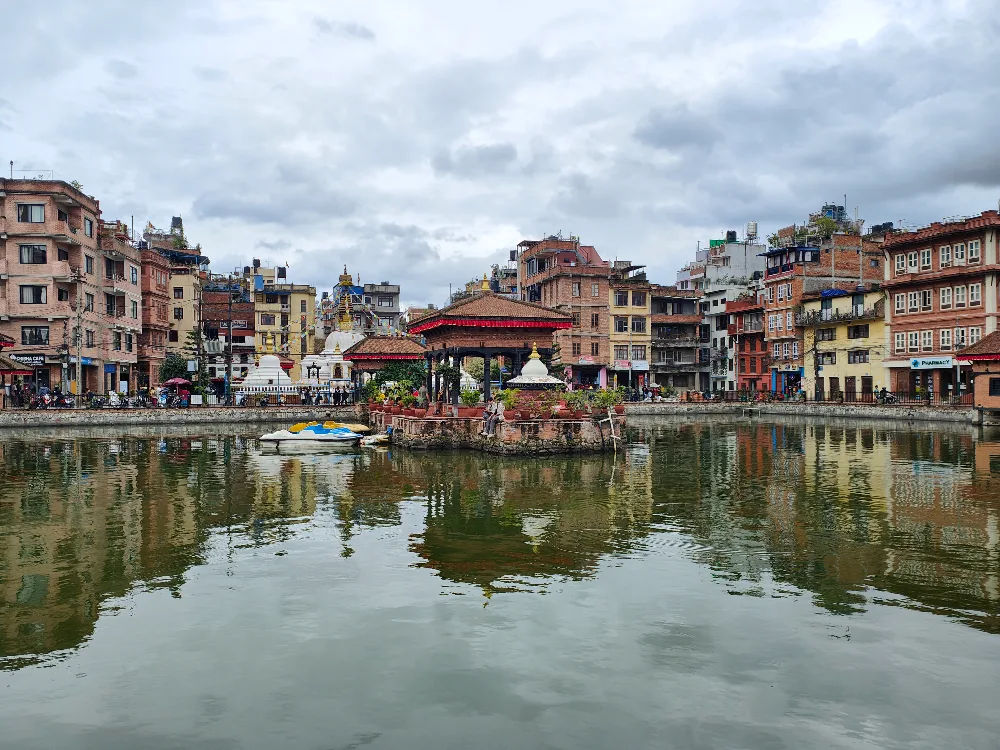
Both cities are full of symbolism that you'll walk past without noticing if no one explains it. A good guide transforms a beautiful building into a story, the Tantric who tricked a goddess, the flame that emerged from the water, the king who built a temple to outshine his rivals.
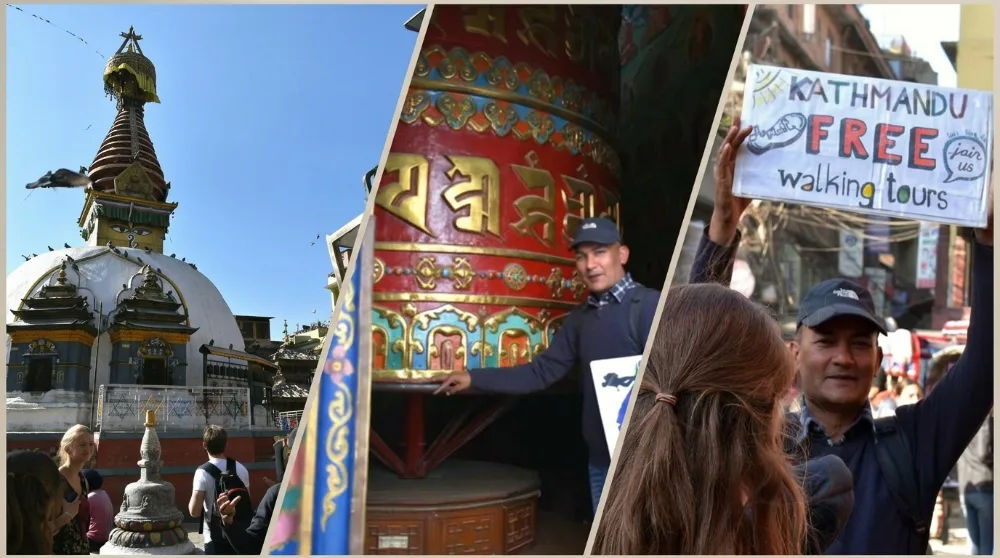
If you're already doing a walking tour in Kathmandu's old city, ask your guide about Patan and Bhaktapur. Many local guides cover all three cities, and the continuity is worth it. You'll start to see the valley as a whole, three cities, three sons of the same dynasty, three different ways of being Newari.
The Verdict
There's no wrong choice. Patan is the refined, accessible, artistic younger sibling. Bhaktapur is the sprawling, atmospheric, medieval elder. One fits neatly into a busy itinerary. The other asks you to slow down and give it time.
If you can only pick one, ask yourself what you're actually looking for. If it's beauty and convenience, Patan. If it's immersion and the feeling of walking through history, Bhaktapur.
And if you can manage both, you'll understand something that neither city can teach you alone: that the Kathmandu Valley was never one place, but always a constellation of cities, each with its own pride, its own gods, and its own way of remembering the past.
Planning a Visit?
If you'd rather not figure out the buses, the tickets, and the timing on your own, Himkala Adventure runs day tours to both Patan and Bhaktapur. These are small, guide-led trips, not big bus groups, and they can be adjusted to your pace and interests. If you're unsure which city suits you better, or whether you can fit both into your schedule, just reach out and ask. They'll give you an honest answer, even if it means telling you to pick one over the other.
You can get in touch via WhatsApp (+977 9841376470) or email (himkalaadventure@gmail.com) to check availability, ask about private versus small-group options, or simply get advice on how to plan your day in the valley.