Two major treks dominate every Nepal itinerary shortlist. Everest Base Camp is the name everyone knows. It's famous for the altitude and the realisation that you're standing at the foot of the world's tallest mountain. Annapurna Base Camp is famous for the scenery, the feeling of being swallowed whole by peaks on every side.
Both treks are achievable for fairly fit, non-technical trekkers. Deciding which one suits you best, however, goes beyond just choosing by name.
To help you decide, this guide breaks down key factors like altitude, cost, logistics, terrain, and overall experience. These details will support your decision as you get closer to booking that flight to Nepal.
At a Glance Comparison
| Features | Everest Base Camp | Annapurna Base Camp |
|---|---|---|
| Maximum altitude | 5,364m (at Kala Patthar) | 4,130m |
| Duration | 12 – 14 days | 10 – 12 days |
| Difficulty | Moderate–challenging | Moderate |
| Base cost (guided) | $1,400 – $2,500 | $700 – $1,200 |
| Starting point | Lukla (flight from Kathmandu) | Pokhara |
| Best seasons | Mar – May, Oct – Nov | Mar – May, Oct – Nov |
Altitude
The altitude difference between these two treks is significant – and this will shape everything from your itinerary to your risk profile.
Everest Base Camp reaches 5,364m at Kala Patthar – the rocky viewpoint above Gorak Shep that frames Everest's north face. The trail itself is good for those with a fair amount of fitness, but the altitude is more unforgiving. Acclimatisation at Namche Bazaar and Dingboche is built into the itinerary for good reason. Above 4,000m, fitness becomes secondary to how well your body adapts.
Annapurna Base Camp has a more manageable altitude at 4,130m, but the terrain more than compensates for this. Daily elevation can be harsher, with steep stone staircases, ascents through dense rhododendron forests, and tough climbs through the Modi Khola valley, with little flat ground to recover on.
Physical Preparation
Neither trek requires prior mountaineering experience, but both reward a solid base of cardiovascular fitness before you arrive.
For Everest, the priority is endurance, as you will be trekking long days at altitude and your body will work harder to compensate for the thinner air. Training should focus on sustained walking, long hikes, uphill work and anything that builds your capacity to walk steadily for half a day with few breaks.
Annapurna can be more demanding on your legs. The steeper ascents and irregular terrain means strength training, particularly quads and knees, matters as much as cardiovascular fitness. Consistent training for a few months before either trek will impact your experience more than you realise.
Duration and Logistics
Out of the two, Annapurna Base Camp is logistically easier. Pokhara is your base – a short domestic flight or a seven-hour bus ride from Kathmandu – and the trailhead is within easy reach. A standard itinerary runs 10–12 days. The route alternates between stretches of quiet trail through forests and small villages, past teahouses, locally-owned shops and the occasional school or temple, though the busier stops still retain a certain calm.
Everest Base Camp is a little more involved with the trek starting from Lukla, accessed only by a flight, which can be weather-dependent. Delays are common, though mainly in shoulder seasons. Namche Bazaar is the last hub before settlements thin out and the route becomes progressively more remote, with longer stretches between stops and less of everyday Nepali life visible on the trail. For EBC, plan for 12–14 days minimum, allowing extra time for acclimatisation.
Cost
Both treks run as fully guided packages – with permits, accommodation, meals, a guide, and an optional porter included. With Himkala Adventure, Annapurna starts from USD 1,180 and Everest from USD 1,450.
Everest's higher cost comes down to logistics. The Khumbu valley is remote, and supplies are expensive. Teahouse prices climb with every kilometre of altitude, and the Kathmandu–Lukla flight is a cost you'll have to factor before arriving at the start point. Annapurna is more straightforward in terms of financial commitment, based in Pokhara with road access to the trailhead via jeep.
Scenery and Experience
Personal preference carries more weight than anything else.
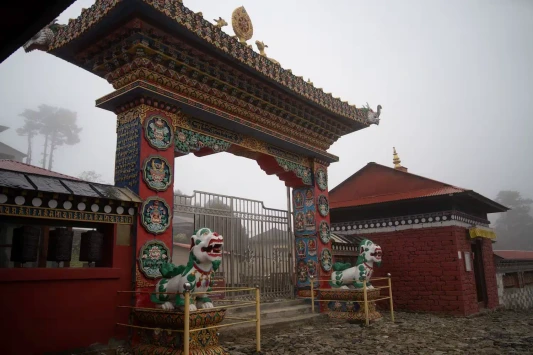
Everest Base Camp moves through the Khumbu valley, through Sherpa villages and ancient monasteries with the constant presence of the world's tallest mountain growing closer with every day. Tengboche Monastery, perched at 3,860m with Ama Dablam rising behind it, is one of the most picturesque, peaceful places in the Himalayas.
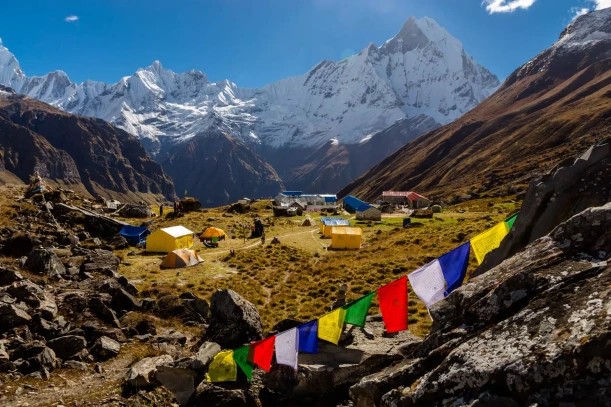
Annapurna Base Camp is a different experience. The trail ascends deep into rhododendron forests, terraced Gurung villages, and the deep gorge of the Modi Khola before opening into the Annapurna Sanctuary – a high glacial amphitheatre circled by peaks exceeding 7,000m. The transition from forest to alpine to sanctuary happens fast. On the descent, Jhinu hot springs offer something Everest can't: a well-earned soak in natural thermal pools with Machhapuchhre standing overhead.
Crowds
Everest Base Camp is one of the most trafficked trekking routes in the world. The spring peak season lasts between April and May and brings significant numbers through the Khumbu valley. It's still a wilderness experience, but a shared one. If solitude matters, your window is narrower and trekking during the shoulder seasons might be for you.
Annapurna draws fewer trekkers, and the trail network is more spread out with different entry and exit points, meaning foot traffic doesn't concentrate the same way – the crowd is more transient with trekkers branching off onto other routes. The Annapurna route itself retains a sense of quiet that's increasingly difficult to find on the Everest route during the peak trekking season.
Best Time to Trek
Spring (March until May) and autumn (September to November) are the best windows for both treks, bringing clear skies, stable temperatures and the best visibility on the high routes. October and November are widely considered the sweet spot: post-monsoon air means exceptional clarity, and the trails are at their most defined.
If your dates are fixed outside the peak windows, Everest gives you more margin due to its better weather coverage during shoulder seasons.
What to Expect
With either trek, you'll travel village-to-village staying in local teahouses with meals included and no camping required. Days typically run up to five to seven hours of trekking, with the pace set by you and your guide. Breaks are a must, and you'll stop for lunch halfway through the day.
The trails largely differ in terrain, with Everest following a well-worn, heavily signposted route through increasingly sparse high-altitude terrain. Annapurna moves through more varied ground: farmland, dense forest, exposed ridgelines, and the dramatic narrowing of the gorge before the sanctuary opens up. You'll also come across more stores, villagers and settlements, especially at lower altitudes.
Which is Right for You?
Standing at the foot of the world's highest mountain carries a weight that no amount of comparison can realistically account for. Everest is for those seeking higher altitude and for those who want deep immersion into Sherpa culture. EBC demands more of your time and budget, but finally making it to base camp is worth it.
Annapurna Base Camp is the stronger choice if you're trekking for the first time at altitude, working with a tighter budget or schedule. It's also the stronger option for variety in scenery, with parts of the trail emptying entirely. Logistically, it's easier, but it still delivers in everything from altitude to experience.
Frequently Asked Questions
Which trek is easier for beginners?
Annapurna Base Camp is generally considered easier for beginners. The maximum altitude is lower at 4,130m compared to Everest's 5,364m, and the logistics are more straightforward with road access from Pokhara. That said, both treks are achievable for fit first-timers with proper preparation.
Do I need a guide for these treks?
Yes, both treks now legally require a licensed guide. In the Annapurna Conservation Area and Sagarmatha National Park, solo trekking is no longer permitted. A guide also arranges teahouse accommodation, handles permits, and knows the terrain – which is invaluable for first-time trekkers at altitude.
How much does each trek cost with Himkala Adventure?
Annapurna Base Camp starts from USD 1,180 for a fully guided package including permits, accommodation, meals, and guide. Everest Base Camp starts from USD 1,450, with the higher cost reflecting the remote location and Kathmandu-Lukla flight. Both treks can be customised to your schedule and budget.
When is the best time to book?
For both treks, the prime seasons are spring (March-May) and autumn (September-November). These windows offer the clearest skies and most stable weather. However, bookings should be made at least 2-3 months in advance, especially for Everest Base Camp which sees high demand in October and April.