Nepal has a trek for every level of experience. Despite its reputation for giant peaks and extreme altitudes, some of the most rewarding adventures are easily within reach for first-timers – with only a moderate level of fitness required.
These five treks are the ones worth considering. They range from single-day hikes a short drive from Kathmandu to multi-day routes deep into the Himalayas. Through rhododendron forests, traditional villages and with views of the Himalayas as your backdrop. All are guided, with permits, accommodation and navigation taken care of before you set foot on the trail.
Whether you have just one day or a full week, whether you want sunrise views over Everest or the spiritual calm of an ancient monastery, there's a trek here waiting for you. Let's find the one that fits.
Nagarkot to Changunarayan – Sunrise Views at Nepal's Oldest Sacred Temple
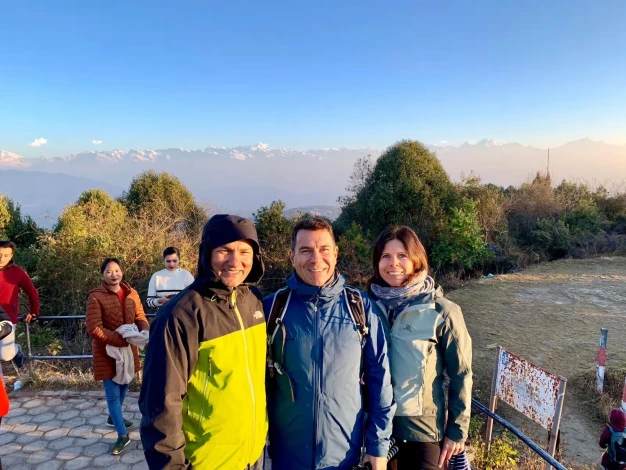
Your day starts at 4:30 AM for the sunrise, but the early alarm is worth it. This mostly downhill hike allows you to witness one of Kathmandu Valley's best sunrise viewpoints with Nepal's oldest standing temple, and it's one of the most manageable routes for someone with little to no trekking experience.
The drive from Kathmandu takes around 90 minutes, timed to arrive at Nagarkot just as the sky begins to lighten for morning. At 2,175m, the viewpoint stretches from Annapurna in the west to Everest in the east and on clear days you'll count dozens of distant peaks catching the sun.
From Nagarkot, the trail drops steadily through pine forests, farmlands and traditional villages across roughly 12 to 15 kilometres of mostly downhill walking, making the total hike around 5 to 6 hours at a relaxed pace. The hike ends at Changunarayan – Nepal's oldest Hindu temple, perched above the valley with 4th century carvings etched on its walls.
At a Glance:
Namobuddha – Witness Culture and History Like No Other
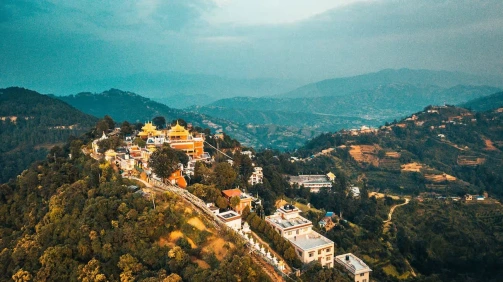
Not every great trek in Nepal is about the altitude. Namobuddha is one of the most sacred Buddhist pilgrimage sites in the country and consists of a single day climb through rural farmlands and thick pine forests to an ancient monastery that has been drawing religious pilgrims for over 2,000 years.
The hike starts near Dhulikhel – around 40 kilometres from Kathmandu, and is a gentle ascent of around 400 metres across 1.5 to 2 hours.
At the top, the Thrangu Tashi Yangtse Monastery stands alongside the ancient stupa, golden rooftops catching the light above the treeline. Inside, over 250 monks study, pray and live and the chanting carries across the courtyard, occasionally punctuated by rhythmic strikes of a drum.
At a Glance:
Ghorepani Poon Hill Trek – Sunrise Views of Annapurna's Mountain Range
If you've been looking for a sign to book your first multi-day trek, this is it.
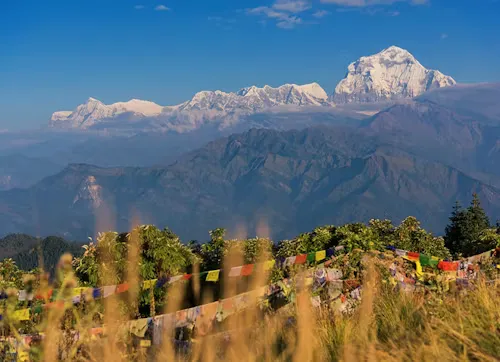
The Ghorepani Poon Hill Trek takes around 6 days and is one of the best multi-day treks for beginners, with some of the best views across the Annapurna Conservation area, at a moderate altitude, making it the ideal first multi-day trek for those with little to no experience of altitude or sustained uphill walking.
On day four, you'll experience the pre-dawn climb to Poon Hill – a 45-minute push up stone steps in the dark. Near the top, the sky begins to shift to deep purple with Annapurna I emerging slowly from the dark. By the time the sun clears the horizon, both Annapurna I and II are lit up in full from the top of Poon Hill.
At a Glance:
Mardi Himal Trek – A Less Travelled Gem of the Annapurna Region
Poon Hill is the obvious first multi-day trek in the Annapurna region – and for good reason. But if you have a week and the need for a bigger challenge, Mardi Himal is what you're searching for.
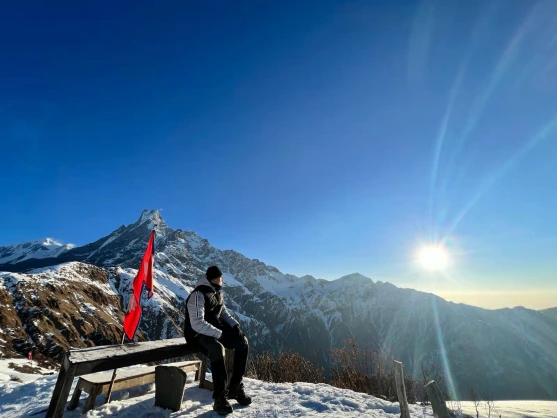
The final push to Mardi Himal Base Camp at 4,500m is where the trek earns its reputation — the altitude bites, the gradient steepens, and the hours add up. But above 4,000m, with Machhapuchhre towering directly ahead and the Annapurna range laid out behind you, whatever the climb took out of you, the view puts back.
At a Glance:
Langtang – Trek the 'Valley of Glaciers' Only a Few Hours from Kathmandu
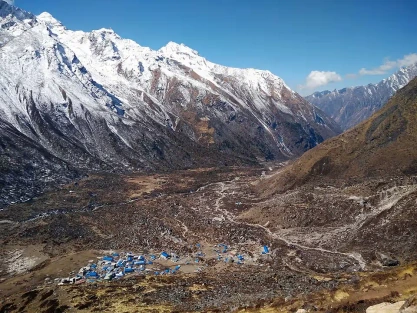
Langtang doesn't get the same headlines as Everest or Annapurna – and that's exactly what makes it worth the attention. A few hours north of Kathmandu, it offers dramatic glacial scenery, dense rhododendron forest and deeply rooted Tibetan-Buddhist culture in a shorter timeframe, with fewer trekkers along the trail, making it a quieter, more peaceful slow ascend.
At 3,870m, the valley opens out at Kyanjin Gompa — the last permanent settlement on the trek, and one of its most memorable stops. The monastery was rebuilt after the 2015 earthquake and sits surrounded by prayer flags, mani walls and ancient stupas, with Langtang Lirung filling the sky beyond.
At a Glance:
Frequently Asked Questions
Do I need a guide to trek in Nepal?
For many routes, yes, and in some cases it's now a legal requirement. Trekking in the Annapurna Conservation Area now requires a licensed guide by law, as does Langtang National Park since 2023. Even on trails where a guide isn't mandatory, hiring one is strongly recommended – particularly for first-time trekkers.
How physically fit do I need to be?
Only a moderate level of fitness is required for all of these treks and you don't need to be an athlete. Some experience with full-day hikes carrying your backpack will make all the difference to your experience.
What should I pack?
It will depend on the season and altitude. Generally, sturdy hiking boots, walking trousers and base layers, a fleece, and a down jacket for the colder evenings at altitude are recommended. Gloves, a hat and extra pairs of wool socks are also recommended. Pack light, and only bring what you think you need.