Indra Jatra, also called Yenya Punhi, is the biggest street festival in Kathmandu, and one of the most important cultural events in all of Nepal. It's celebrated by the Newar community, the original inhabitants of the Kathmandu Valley, but the whole city takes part. Uniquely, it's honored by both Hindus and Buddhists together, which says a lot about how deeply woven Nepal's two major religious traditions are into daily life here.
The festival honors Lord Indra, the Hindu god of rain and king of heaven, and also marks the founding of Kathmandu city by King Gunakamadeva over a thousand years ago. At its heart, though, Indra Jatra is really about the Kumari, Kathmandu's Living Goddess, a young girl worshipped as the living incarnation of the goddess Taleju. During the festival, she leaves the Kumari Ghar (her residence) and is pulled through the old city streets on a wooden chariot, one of the only times all year the public can see her outside her home.

The Legend Behind the Festival

The story behind Indra Jatra is part myth, part local memory. According to legend, Lord Indra came down to earth disguised as an ordinary person to pick a rare flower, the parijat, for his mother. Local villagers, not recognizing him, caught him and tied him up as a thief. When Indra's mother, the goddess Dagini, came down from heaven searching for her missing son, she revealed his true identity, and the city realized who they had captured. In apology, and in gratitude for the rain and harvest Indra provides, the city began celebrating this festival every year, honoring both Indra and the memory of those who died in the past year, whose families take part in the accompanying Gai Jatra traditions around the same season.
Indra Jatra 2026 Dates and Schedule
Indra Jatra 2026 runs for eight days, from Wednesday, September 23 to Wednesday, September 30, 2026. If you're planning to visit Kathmandu for the festival, here's the day-by-day breakdown of what happens and when:
September 23 – Yosin Thanegu: The festival officially begins at Kathmandu Durbar Square with the ceremonial raising of the Yosin, a large wooden pole cut from a sacred tree and erected in front of the old royal palace.
September 25 – Kwaneya (Main Day): This is the biggest day of the festival. The Kumari's chariot procession begins, moving through the southern part of old Kathmandu, accompanied by masked Lakhey dancers and traditional music. This is the day most visitors plan around.
September 26 – Thaneya: The chariot procession continues through the northern part of the old city, passing through Asan and Indra Chowk, two of Kathmandu's oldest and busiest market squares.
September 29 – Nanichaya: The final chariot procession, often led by women, winds through the city once more.
September 30 – Yosin Kwathalegu: The sacred pole raised on day one is lowered, formally marking the end of the festival.
If you can only be in Kathmandu for one or two days of the festival, aim for September 25, the main chariot day, or arrive by September 23 to see the full transformation of the city as the festival begins.
What to Expect: Masks, Chariots, and Rice Beer
A few things make Indra Jatra genuinely unlike any other festival in Nepal:

The Kumari's chariot procession. Watching Kathmandu's Living Goddess pulled through the old city on a tall wooden chariot, surrounded by crowds, drums, and incense, is a rare and powerful sight. It's one of the very few times each year the Kumari appears in public at all.

The Lakhey dance. Masked dancers representing Lakhey, a mythological demon-protector figure, move through the streets in red masks and elaborate costume, a tradition that dates back centuries and remains one of the most photographed parts of the festival.
The Seto Bhairab mask. At Hanuman Dhoka near Basantapur Durbar Square, a giant mask of Seto Bhairab (the White Bhairab) is unveiled for the festival, one of the only times of year it's shown. During the celebrations, locally brewed rice beer is traditionally poured through a pipe from the mask's mouth for people to drink, a tradition that draws large crowds each evening.
The Yosin pole. The tall wooden pole raised at the start of the festival and lowered at the end isn't just decoration, it represents Indra's own flag and is treated as a sacred object throughout the celebrations.

Traditional Newari performances. Indra Jatra is more than the Kumari's chariot and the Lakhey masks. Throughout the eight days, traditional Newari dance groups, often made up of young girls in ceremonial dress, perform in courtyards and along the procession routes. These performances are part of the living Newar cultural tradition that gives the festival its character, passed down through families and neighborhoods for generations.
Where to Watch Indra Jatra in Kathmandu
Nearly everything happens in and around the old city core:
Kathmandu Durbar Square (Basantapur): The heart of the festival, home to the Yosin pole raising, the Kumari's chariot, and the Seto Bhairab mask.
Hanuman Dhoka: The old royal palace complex, directly adjacent to Durbar Square.
Asan and Indra Chowk: Historic market squares that the chariot procession passes through on the second day, also two of the best spots to see the festival blended into everyday Kathmandu street life.
Tips for Tourists Visiting During Indra Jatra
A few practical things to keep in mind if you're planning to attend:
Arrive early on procession days. Crowds build fast around Basantapur, especially on the main chariot day, September 25.
Expect road closures and crowds throughout the old city core for the full eight days, plan extra time to get around.
Dress modestly and stay respectful near religious processions and shrines, this is a living religious festival, not a staged show.
Bring a camera, but ask before close-up photos of performers and priests where appropriate.
Base yourself near Thamel or the old city if possible, it puts you within easy walking distance of everything.
Frequently Asked Questions
When is Indra Jatra 2026?
Indra Jatra 2026 runs for eight days, from Wednesday, September 23 to Wednesday, September 30. The main chariot procession day, Kwaneya, falls on Friday, September 25, 2026.
Where is Indra Jatra celebrated?
Indra Jatra is celebrated in Kathmandu, Nepal, centered around Kathmandu Durbar Square (Basantapur) and Hanuman Dhoka, with the chariot procession also passing through Asan and Indra Chowk.
What is the Kumari, and will I see her during Indra Jatra?
The Kumari is Kathmandu's Living Goddess, a young girl worshipped as the living incarnation of the goddess Taleju. During Indra Jatra, she is pulled through the old city streets on a wooden chariot, one of the only times each year she appears in public.
How many days does Indra Jatra last?
Indra Jatra is an eight-day festival, starting with the raising of the sacred Yosin pole and ending with its lowering eight days later.
Is Indra Jatra a Hindu or Buddhist festival?
Both. Indra Jatra is one of the few major Nepali festivals celebrated jointly by Hindus and Buddhists, reflecting how closely the two traditions are woven together in the Kathmandu Valley.
What should tourists know before visiting Indra Jatra?
Expect large crowds and road closures around the old city core, especially on the main chariot day. Dress modestly, stay respectful near religious processions, and arrive early if you want a good view of the chariot procession or the Kumari.
Do I need a guide to understand Indra Jatra?
Not strictly, but a local guide makes a big difference. Much of the festival's meaning, the masks, the chariot route, the rituals, isn't obvious just from watching. A guided walking tour through the same streets helps put what you're seeing into context.
The Easiest Way to Experience Indra Jatra: With a Local Guide
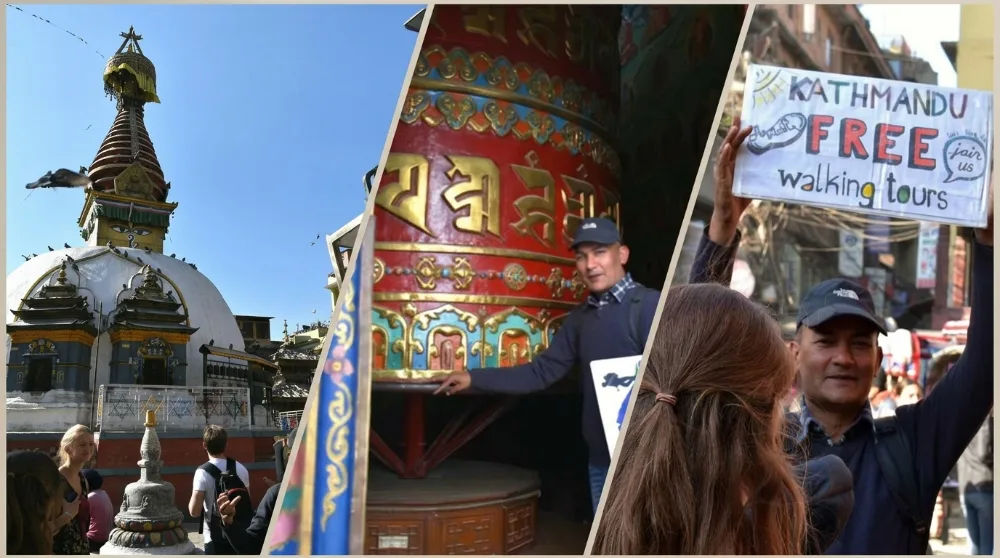
Indra Jatra is dense with history, symbolism, and ritual that isn't obvious just from watching, why the mask matters, who the dancers represent, what the chariot route means. Our Free Walking Tour Kathmandu, run by certified local guides, walks through the exact same streets, Durbar Square, Asan, and Indra Chowk, where the festival takes place, and is a great way to understand the city's culture and history before or after you experience the festival itself. If you're planning to be in Kathmandu around September 23 to 30, 2026, get in touch and we can help you plan your visit around the festival dates.