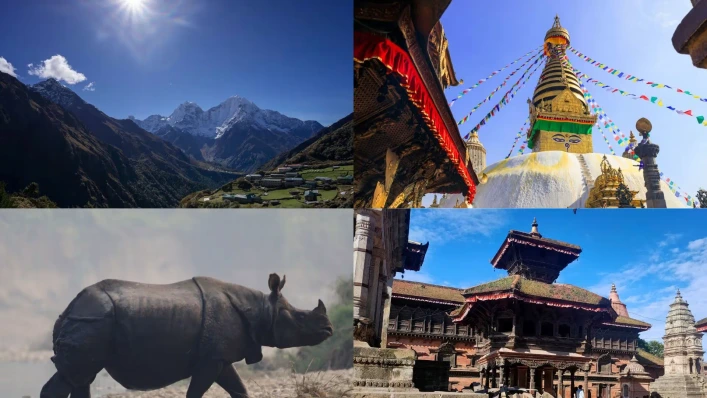
As of today, September 25, 2026, Nepal is in the middle of a severe monsoon weather system that authorities are treating as a national-level emergency.
The Nepal Tourism Board issued a formal travel safety advisory on September 22, warning of heavy to extremely heavy rainfall across multiple provinces from September 25 to 27. The Department of Hydrology and Meteorology has gone further, issuing a red alert for the Himalayan region and calling on trekkers already on the trails to return to safer, lower elevations immediately.
This isn't the kind of rain you shrug off with a rain jacket. This is the kind that closes highways, grounds flights, and triggers landslides on trails that were safe yesterday.
A meteorologist with the Department of Hydrology and Meteorology put it directly: "Do not go trekking in the Himalayan region. Avoid long-distance travel from September 25 to 27."
That advice is for everyone. It's not aimed only at inexperienced travelers.

The Official Advisory: What Authorities Are Saying
The Nepal Tourism Board's advisory is clear and specific:
Heavy to extremely heavy rainfall is forecast across Gandaki, Lumbini, eastern Koshi, southern Madhesh, central Bagmati, and far-western Sudurpashchim provinces.
Snowfall is possible at higher elevations, which makes high-altitude trekking especially dangerous right now.
Tourists are advised to avoid trekking, mountaineering, and other outdoor activities during unsafe weather conditions.
Everyone should check weather forecasts and official advisories before any travel.
Travelers near river basins and mountainous areas should exercise extra caution.
The U.S. Embassy in Nepal has also issued a natural disaster alert, warning travelers to expect road disruptions and to stay away from riverbanks, low-lying areas, damaged bridges, and unstable slopes.
This is coordinated, multi-agency guidance. It's not bureaucratic caution for its own sake as it reflects genuine, immediate risk.

Which Treks and Regions Are Affected
Let's be specific about what's actually impacted.
Manaslu Circuit
The Manaslu region itself wasn't hit by the August 26 flood disaster the way Rasuwa was, and treks there are still operating. What's causing problems right now is the weather: heavy rainfall in the lower elevations and snow in the upper sections, which together have made conditions genuinely difficult across the route.
There is one real infrastructure issue. A recent flood swept away houses and two suspension bridges in the Namrung forest area, briefly severing the route. Locals have since built a temporary wooden bridge that is currently working, so the route is passable again through that specific point. The section before Namrung, however, remains dangerous and landslide-prone for now, and the lower Budhi Gandaki gorge from Machha Khola through Jagat and Deng carries the highest landslide risk on the entire route during monsoon.
Local authorities have still urged trekkers heading toward Manaslu and Larkya Pass to postpone their trips until conditions improve. If you have a Manaslu trek booked in the next week, treat it as uncertain at best.
Gandaki Province
Gandaki Province, home to the Annapurna Circuit, Annapurna Base Camp, Mardi Himal, and Manaslu, is under a specific red alert for extremely heavy rainfall. If you have a trek booked in this region in the next week, assume it's not happening as planned.
Langtang and Rasuwa
The Langtang and Rasuwa region remains severely affected by the aftermath of the August 26 glacial flood disaster. The U.S. Embassy explicitly advises not to travel to the Rasuwagadhi–Timure–Syafrubesi area for any reason.
Everest Region
Everest region access is compromised through flight disruptions. Lukla Airport has been closed due to poor visibility, with flights cancelled and passengers stranded at Tribhuvan International Airport.
Even trails that aren't flooded are compromised by the simple fact that emergency response is stretched thin across the country. If something goes wrong, help is harder to reach than usual.

Road and Flight Disruptions: The Full Picture
This is where the situation gets genuinely difficult for independent travelers.
Highways are closed or restricted across the country. The Prithvi Highway and Narayangadh-Muglin road section, the main routes between Kathmandu, Chitwan, and Pokhara, are closed due to landslides and ongoing rainfall. The BP Highway is blocked in Kavrepalanchok, with night travel restrictions in place until at least September 28.
Night travel bans are in force across dozens of districts, including Chitwan, Dhading, Rasuwa, Sindhupalchok, Mustang, Kaski, and many more. Long-distance public transport from Kathmandu's Gongabu New Bus Park was suspended from Thursday evening.
Domestic flights are disrupted nationwide. Five airports, Bharatpur, Pokhara, Lukla, Simara, and Surkhet, were closed Friday morning due to low visibility. More than 130 domestic departures were scheduled for Friday, and many didn't operate. Buddha Air and Yeti Airlines both warned of delays and cancellations.
The practical reality: you cannot assume you'll be able to move around Nepal as planned right now. Roads that were open this morning may close by afternoon. Flights that are scheduled may not operate.
What To Do If You're Already in Nepal
If you're currently in Nepal, here's my honest advice:
Stay where you are if you're in a safe location. If you're in Kathmandu, Pokhara, or another city with solid infrastructure, this is not the time to attempt long-distance travel. The Kathmandu Post reported that authorities have urged people to avoid long-distance and night travel as heavy rainfall is forecast through October 3.
If you're on a trek, return to lower elevations. The Meteorological Forecasting Division has directly advised trekkers already on routes to come down immediately. This is not an overreaction. High-altitude areas are facing both heavy rain and potential snowfall, with landslide risk increasing by the hour.
Avoid riverbanks, landslide-prone slopes, and damaged infrastructure. The U.S. Embassy's guidance is straightforward: stay away from floodwater, damaged bridges, and unstable ground.
Check your flight status before leaving for the airport. Multiple airlines have advised passengers to verify flight status through apps or websites before traveling.
Stay in a solid, well-situated hotel. If you're in Kathmandu, this is a good time to be in a well-built property in a safe area, not a guesthouse near a river or on a hillside.
What To Do If You're Planning to Arrive Soon
If you have a trip to Nepal booked in the next week, contact your tour operator or trekking agency immediately. The situation is changing daily.
For travelers with trekking permits already issued: your itinerary almost certainly needs to change. A responsible operator should be offering alternatives, cultural tours in the Kathmandu Valley, lower-elevation walks, or postponement to a safer window.
For travelers with flights into Kathmandu: international flights to Tribhuvan International Airport have been operating under Instrument Flight Rules, meaning they can land despite lower visibility. Your arrival is probably fine. It's moving around after arrival that's the challenge.
For travelers considering booking a last-minute trip right now: don't. This is not the week to arrive in Nepal expecting a Himalayan trek. The weather system is forecast to affect the country through at least September 27, and recovery from road and trail damage will take longer.
Frequently Asked Questions
Is it safe to travel to Nepal right now?
If you're already in a safe location in a city like Kathmandu or Pokhara, yes, stay put and avoid long-distance travel. If you're planning to arrive for trekking in the next week, postpone. The Nepal Tourism Board has advised tourists to avoid trekking and outdoor activities during the current weather system.
Will my trek be cancelled?
Most likely, yes, at least in its planned form. The Manaslu Circuit is effectively closed, and trekking in Gandaki Province (Annapurna region) is under a red alert. Contact your operator.
Are flights operating?
Some are, some aren't. International flights to Kathmandu are largely operating under IFR. Domestic flights are heavily disrupted, with five airports closed as of Friday morning.
Can I get to Pokhara or Chitwan?
Not reliably by road. The Prithvi Highway and Narayangadh-Muglin section are closed. Flights to Pokhara were also disrupted Friday.
What if I have a trek booked through Himkala Adventure?
If you have an upcoming booking with us, we're already in contact with affected travelers. We're offering alternatives, cultural tours in Kathmandu, shorter valley walks, or postponement to a safer window. Reach out on WhatsApp or email and we'll work through your options.
How long will this last?
The heaviest rain is forecast through September 27. Road and trail recovery will take longer, possibly into early October. The Kathmandu Post reported that authorities are urging caution through October 3.
How We Can Help
This is a difficult week for travel in Nepal. But it's also a week where having a local team on the ground makes a real difference.
If you're in Kathmandu and want to make the most of your time here despite the weather, we run cultural walking tours and heritage site visits that operate rain or shine. Kathmandu Durbar Square, Boudhanath, Pashupatinath, the old city markets, these are all accessible, safe, and genuinely worth seeing even in the rain.
If your trek has been disrupted, we can help you replan. Whether that means shifting dates, switching to a different itinerary, or building a custom Kathmandu Valley experience while the mountains recover, we're here.

Get in touch on WhatsApp or email today. Tell us where you are, what your original plan was, and what you'd like to do.
Stay safe. The mountains will still be there when this passes.
Weather and travel conditions are changing rapidly. Always verify current conditions with your operator, the Nepal Tourism Board, and the Department of Hydrology and Meteorology before traveling.