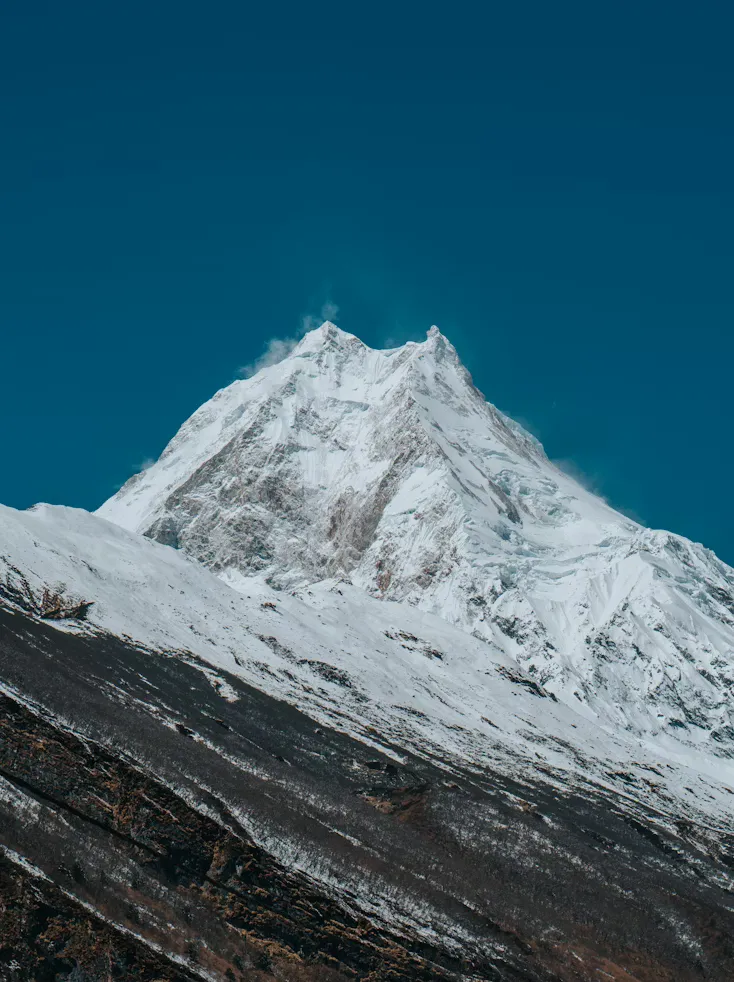
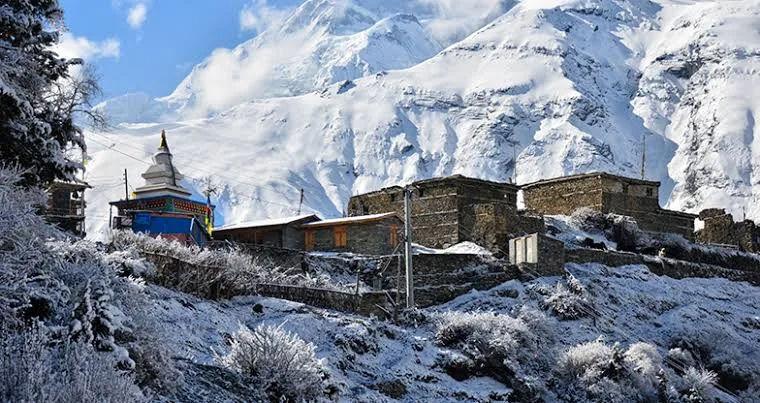
Imagine a valley so remote that it remained closed to outsiders until 2002. A place where Tibetan Buddhism is still the heartbeat of daily life, where centuries-old monasteries sit against a backdrop of Annapurna II and Gangapurna, and where stone villages look almost unchanged from the days when this route was a trade corridor to Tibet. Welcome to Nar Phu Valley, tucked into the Manang district of the Annapurna region and still classified today as a Restricted Area by the Government of Nepal.
Because entry requires a special government permit, a licensed guide, and a minimum of two trekkers, Nar Phu has stayed almost entirely off the radar of mass tourism. While thousands of trekkers pass through Manang each season on the Annapurna Circuit, only a small fraction turn north into the narrow gorge that leads to Nar and Phu. That exclusivity is exactly what makes it one of the true hidden gems of Nepal: a chance to trek through a living Tibetan Buddhist culture rather than a tourist reconstruction of one.
Why Nar Phu Is Different
Here's what you need to know about the Nar Phu Valley trek:
Cultural Immersion, Not a Photo Stop
Nar Phu is not just a walk through mountain scenery. It is a journey into a living Tibetan Buddhist culture that has been shaped by centuries of relative isolation. Monasteries such as Tashi Lhakhang in Phu village are not maintained as tourist attractions; they are active spiritual centers where local lamas and villagers still practice daily rituals. Trekkers who pass through are guests in a functioning religious community, not visitors to a museum.
A Genuine Physical Challenge
This is a trek for people who already have some high-altitude experience, or who are prepared to build fitness seriously before arriving. The route's centerpiece is the crossing of Kang La Pass at 5,320 meters, a long, cold, and technically demanding day that connects the Nar Phu side valley back to the main Annapurna Circuit near Ngawal. The reward for that effort is a sweeping panorama of the Annapurna massif, Himlung Himal, and the peaks ringing the Manang valley, seen from a vantage point almost no other trekkers reach.
Landscape That Keeps Changing Character
Few treks in Nepal shift mood as dramatically as Nar Phu. The approach begins in the narrow, almost claustrophobic gorge of the Nar Khola, where the trail is cut into sheer rock walls and crosses the river on wooden bridges and cantilevered walkways. Beyond Phu village, the terrain opens into high, wind-scoured plateau country that feels closer to the Tibetan plateau than to the forested lower Annapurna trails. From there, the climb to Kang La Pass delivers some of the most expansive high-altitude views in the entire Annapurna region.
Essential Trekking Details
Here's the essential information you need to plan your Nar Phu Valley trek:
⏱️ Duration
Most itineraries run 15 to 20 days including travel to and from Kathmandu, with roughly 10 to 14 of those days spent walking. Shorter fixed departures exist for trekkers combining Nar Phu with a full Annapurna Circuit exit over Thorong La, while dedicated Nar Phu-only itineraries can be tightened to around 10 to 12 trekking days.
🌸 Best Time to Visit
Spring (March to May) and autumn (September to November) offer the clearest mountain views and the most stable weather for the Kang La Pass crossing. Autumn is also peak season in the valley, which means better trail and teahouse conditions but a slightly higher permit fee. Winter brings heavy snow that can close Kang La entirely, and the monsoon months carry a higher risk of landslides in the narrow Nar Khola gorge.
📋 Permits Required
Restricted Area Permit (RAP)
This is the permit that defines the trek. It can only be issued through a registered trekking agency, requires a licensed guide, and requires a minimum of two trekkers per group; solo restricted-area trekking is not permitted under Nepali law. Fees are seasonal: roughly USD 100 per person for the first seven days during peak season (September to November), or roughly USD 75 for the same period from December to August, with an additional daily charge for extensions beyond the first week. I can handle this entire process for you.
Annapurna Conservation Area Permit (ACAP)
Required to enter the wider conservation area the trek passes through, priced at roughly NPR 3,000 (about USD 25 to 30) for foreign nationals, with a reduced rate for SAARC nationals.
TIMS Card
Some sections of the route outside the strictly restricted zone may also require a Trekkers' Information Management System card, which your agency can arrange alongside the other permits.
⛰️ Difficulty Level
Moderate to challenging. Good general fitness is essential, and some previous experience at altitudes above 4,000 meters is strongly recommended before attempting the Kang La Pass crossing.
Day-by-Day Nar Phu Valley Trek Itinerary
This is a 12-day trekking itinerary, roughly 15 days total once you add arrival and departure days in Kathmandu. It follows the standard route used by most agencies, with two dedicated acclimatization days built in at Phu and Nar since the jump from the Nar Khola gorge to Kang La Pass is one of the biggest elevation swings of any trek in the Annapurna region.
Kathmandu to Besisahar, then Koto (2,600m)
An early drive from Kathmandu to Besisahar on a paved road, followed by a rougher jeep ride along the Marsyangdi valley to Koto, the official start and end point of the restricted area. Permits are checked at the entry checkpoint here.
Koto to Meta (3,560m)
The trek begins by crossing a suspension bridge and entering the narrow, dramatic gorge of the Nar Khola, the geographic boundary of the restricted zone. Roughly 6 to 7 hours of walking through pine forest that gradually gives way to drier, higher terrain.
Meta to Phu Village (4,250m)
A longer day, around 7 to 8 hours, following the Phu Khola past the seasonal settlement of Kyang and through increasingly stark, high-desert scenery before Phu comes into view, its stone houses built into the hillside like a small fortress.
Acclimatization day in Phu
A short exploration day rather than a rest day. Most trekkers visit Tashi Lhakhang Monastery, walk up toward the old fort ruins above the village, or take a gentle hike to help the body adjust before continuing higher.
Phu to Nar Phedi (3,490m)
A shorter, mostly downhill day back through the gorge before climbing again toward Nar Phedi, the staging point below Nar village.
Nar Phedi to Nar Village (4,110m)
A relatively short climb into Nar, the "Monastery Village," with the afternoon free to explore its gompas and enjoy sweeping views back down the valley.
Acclimatization day in Nar
A second, essential acclimatization day before the Kang La crossing. Many trekkers use it for a short hike toward the Kang La Phedi side to look at the pass and judge conditions.
Nar to Ngawal via Kang La Pass (5,320m)
The hardest and longest day of the trek. An early start, often before sunrise, for a long climb to the pass followed by a steep, knee-testing descent of well over a thousand meters into Ngawal (3,660m), back on the main Annapurna Circuit trail.
Ngawal to Pisang (3,200m)
A shorter, easier day that lets the body recover after the pass, with fine views of Annapurna II and Pisang Peak along the way.
Pisang to Besisahar (by jeep)
A long day covering by road what would otherwise take several more days on foot, following the lower Annapurna Circuit trail out to the roadhead.
Besisahar to Kathmandu or Pokhara
A final drive back to Kathmandu, or, if you'd rather end the trip with mountain views over a lake instead of city traffic, on to Pokhara instead.
This is a researched, standard-route outline rather than a fixed schedule. Weather at Kang La Pass, snow conditions, and individual acclimatization can all shift the exact pacing, which is one more reason to travel with a guide who knows the valley and can adjust the plan on the ground.
Cultural Highlights Along the Route
Here's what you need to know about the key villages and cultural highlights of the Nar Phu Valley:
Nar Village
Often called the "Monastery Village," Nar sits at around 4,110 meters and offers sweeping panoramic views of the surrounding Himalaya alongside genuine opportunities to interact with the community, whose daily rhythms of prayer, farming, and herding continue much as they have for generations.

Phu Village
The heart of the valley, Phu is a cluster of traditional stone houses built into a fortress-like hillside above the Phu Khola, with a history stretching back to its role as a stronghold on the old salt-trading route to Tibet.
Tashi Lhakhang Monastery
One of the most significant and holy sites in Phu village, this monastery remains an active center of worship rather than a preserved relic, and visiting with respect for its ongoing spiritual role is part of what makes the experience meaningful.
Local Festivals
Depending on timing, trekkers may witness local festivals in Nar or Phu, occasions marked by masked dances, prayer flags, and communal celebration that offer a rare, unfiltered look at Tibetan Buddhist tradition as it is actually lived, not performed for visitors.
How I Can Help
I am a licensed trekking guide with Himkala Adventure, based in Thamel, Kathmandu, and I specialize in off-the-beaten-path treks like Nar Phu. Because this is a restricted area, planning it properly matters: permits, guide certification, group logistics, and route timing all need to line up before you arrive. I handle the full Restricted Area Permit and ACAP process, arrange experienced local support along the trail, and build an itinerary around your fitness level and the season you're traveling in, so that your trip into the Forbidden Kingdom is safe, well-paced, and genuinely memorable. Get in touch to start planning your journey into Nar Phu Valley.
Frequently Asked Questions
Is the Nar Phu Valley Trek suitable for beginners?
Not as a first trek. Nar Phu is graded moderate to challenging, involves multiple days above 4,000 meters, and finishes with a demanding crossing of Kang La Pass at 5,320 meters. Trekkers with at least one prior high-altitude trek, such as the Annapurna Circuit or Everest Base Camp, are far better prepared for the pace and altitude here.
Do I need a guide to trek Nar Phu Valley?
Yes, and it isn't optional. Because Nar Phu is a government-designated Restricted Area, Nepali law requires a licensed guide and a minimum group size of two trekkers, and the Restricted Area Permit can only be issued through a registered trekking agency. Independent, unguided trekking is not permitted in this region.
How hard is Kang La Pass?
It's the most physically demanding day of the trek. From Nar, you climb roughly 1,200 meters to reach the 5,320-meter pass, then descend nearly 1,700 meters down the other side to Ngawal, all in a single long day that typically starts before sunrise. Good acclimatization beforehand and stable weather are both essential, since snow or high winds can make the crossing dangerous.
What is the best time of year to trek Nar Phu Valley?
Autumn (September to November) and spring (March to May) offer the clearest skies and the most reliable conditions for crossing Kang La Pass. Winter often closes the pass with snow, and the monsoon months bring a higher risk of landslides in the narrow Nar Khola gorge.
Can Nar Phu Valley be combined with the Annapurna Circuit?
Yes, and many trekkers do exactly that. Since the route rejoins the main Annapurna Circuit trail at Ngawal, it's straightforward to continue on to Manang and cross Thorong La to Muktinath, turning the trip into a longer, combined adventure rather than a there-and-back side trek.
How much does the Nar Phu Valley Trek cost?
Package prices vary by itinerary length, group size, and season, but most agencies quote somewhere in the range of USD 1,200 to 1,900 per person for a full guided trip including permits, a guide, and teahouse accommodation. Smaller private groups generally pay more per person than larger ones, since the Restricted Area Permit fee is charged per trekker per week.
Is there mobile network or Wi-Fi in Nar Phu Valley?
Coverage is limited and unreliable once you're inside the restricted area. Some teahouses in Nar and Phu offer paid Wi-Fi, but it can be slow or unavailable depending on weather and load. It's worth treating this trek as a genuine break from connectivity rather than counting on staying online.
What about altitude sickness?
The itinerary above includes two dedicated acclimatization days, at Phu and again at Nar, specifically to reduce the risk of Acute Mountain Sickness before the push over Kang La Pass. A gradual ascent profile, drinking plenty of water, and being honest with your guide about symptoms are the best defenses. Carrying Diamox and knowing the signs of AMS is standard practice at these altitudes.
Key Highlights at a Glance

Explore the hidden Nar Phu Valley, closed to outsiders until 2002.
Visit ancient, still-active monasteries including Tashi Lhakhang in Phu village.
Cross the dramatic Kang La Pass at 5,320 meters.
Immerse yourself in living Tibetan Buddhist culture in Nar and Phu villages.
Take in panoramic views of Annapurna II, Gangapurna, and Himlung Himal.
Trek one of Nepal's true restricted-area routes, with a Restricted Area Permit, mandatory guide, and minimum group size of two.
Few treks in Nepal offer this combination: a genuinely restricted destination, a living Tibetan Buddhist culture, and some of the finest high-altitude scenery in the Annapurna region, all on a trail most visitors to Nepal never even hear about. If the idea of walking into a forbidden kingdom rather than a well-worn circuit appeals to you, Nar Phu Valley is waiting.