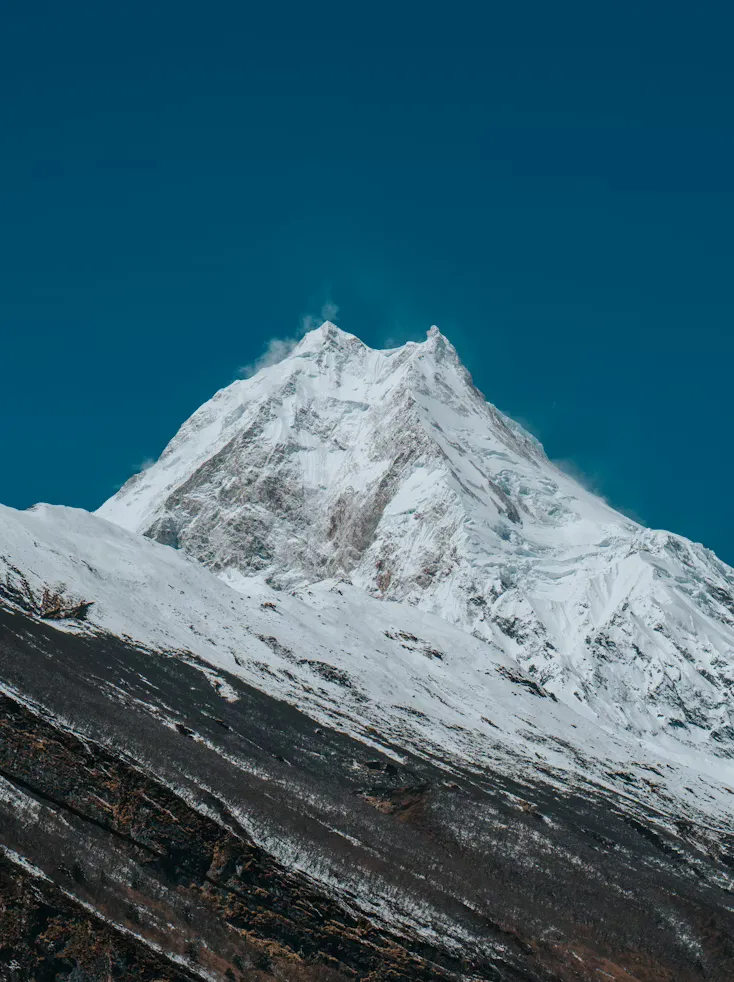
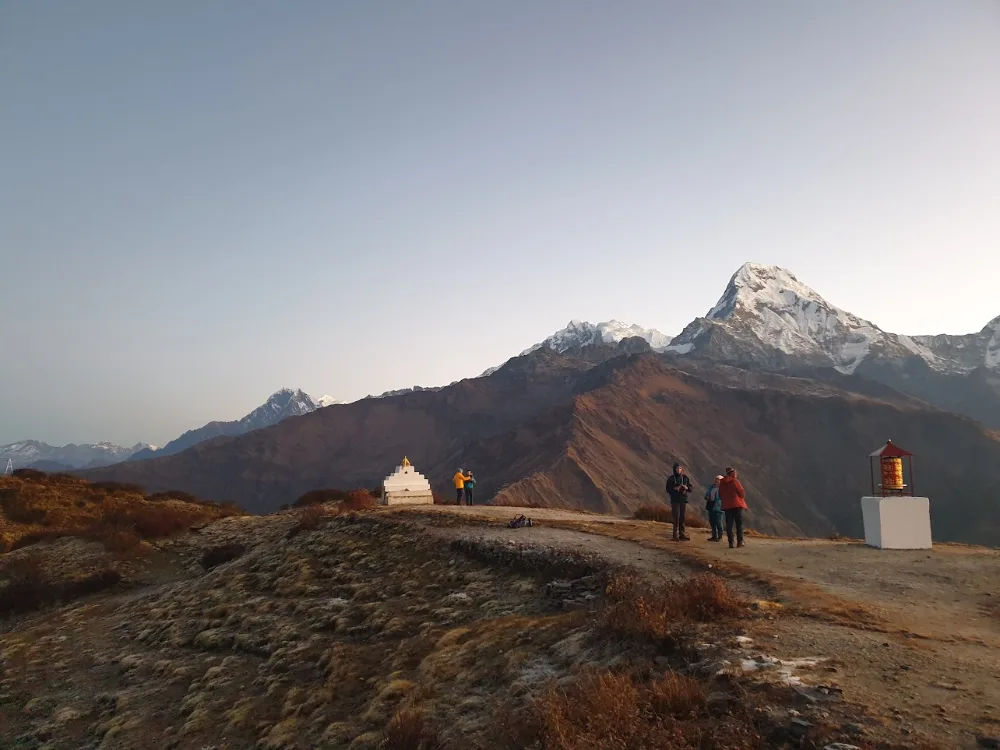
Muldai Viewpoint sits at 3,637 meters above sea level, perched on a ridge above the village of Dobato in the Annapurna region. It's not a household name like Poon Hill or Annapurna Base Camp, and that's precisely the point.
The viewpoint is reached from Dobato (3,350 meters), a small settlement with a handful of teahouses that serves as the base for the sunrise hike. The walk from Dobato to the viewpoint takes roughly 45 minutes to an hour, depending on pace and conditions. You leave before dawn, headlamp on, and arrive just as the first light touches the high peaks.
From the top, the panorama includes Annapurna South, Annapurna I, Machhapuchhre (Fishtail), Dhaulagiri, Hiunchuli, Gangapurna, Nilgiri, and Lamjung Himal. On a clear day, you can see across the middle hills of Nepal all the way toward the Ganges plains in India. It's the kind of view that makes you forget to take photos for a few minutes.

Why Nobody Talks About It (And Why That's Changing)
Muldai isn't new. It's been known to guides and locals for years. But until roughly a decade ago, there were no teahouses at Dobato, just a campsite used by trekking groups doing the Khopra Danda route. Without accommodation, the viewpoint remained inaccessible to independent trekkers and short-itinerary groups.
That's changed. Dobato now has basic teahouse lodging, and the trail is becoming more established. But it still hasn't reached the critical mass of Poon Hill. One trekker who visited recently noted "no more than 20 people" at the viewpoint, a number Poon Hill exceeds before sunrise on any given autumn morning.
The word is spreading, though. Social media is beginning to catch on, and trekking companies are adding Muldai to their itineraries. If you want the quiet version of this experience, the window is now.
The Route: How You Actually Get There
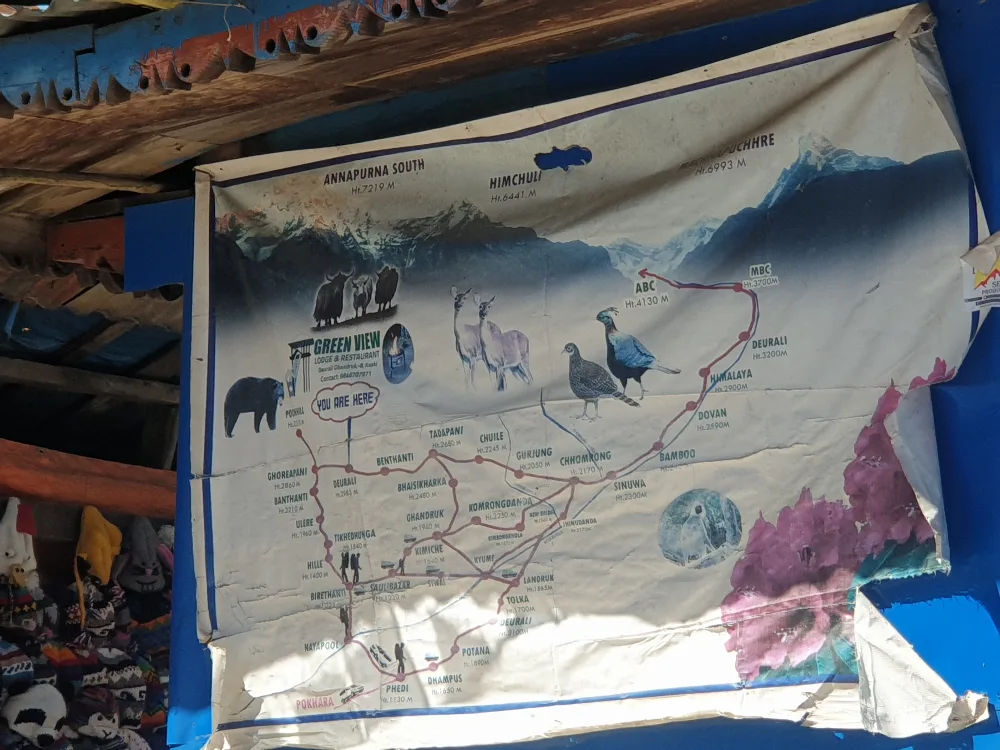
Most Muldai itineraries run 4 to 5 days from Pokhara, though variations exist depending on how you connect it to other trails. The standard route ends at Ghorepani, which means you have the option of a second sunrise viewpoint before descending.
Day 1: Pokhara to Ghandruk (1,940m)
Drive to Kimche (1,610m), then walk uphill to Ghandruk, one of the largest Gurung villages in Nepal. You'll get your first close views of Annapurna South, Hiunchuli, and Machhapuchhre from the village.
Day 2: Ghandruk to Tadapani (2,600m)
The trail climbs through rhododendron and oak forest, with occasional breaks in the canopy revealing mountain views. Tadapani is a small ridge settlement known for close-up views of Machhapuchhre and Annapurna South in the early morning.
Day 3: Tadapani to Dobato (3,350m)
This is the quieter section. The trail runs through forest with good birdlife, and you'll notice fewer trekkers than on the previous days. Dobato is small, a few teahouses, basic facilities, and the knowledge that you're sleeping at the base of the viewpoint.
Day 4: Dobato to Muldai Viewpoint (3,637m) to Ghorepani (2,874m)
This is the day you came for. Wake before dawn, walk 45 minutes to an hour to the viewpoint, and watch the sun rise over the Annapurnas. After descending back to Dobato for breakfast, the trail continues to Ghorepani, where you'll spend the night.
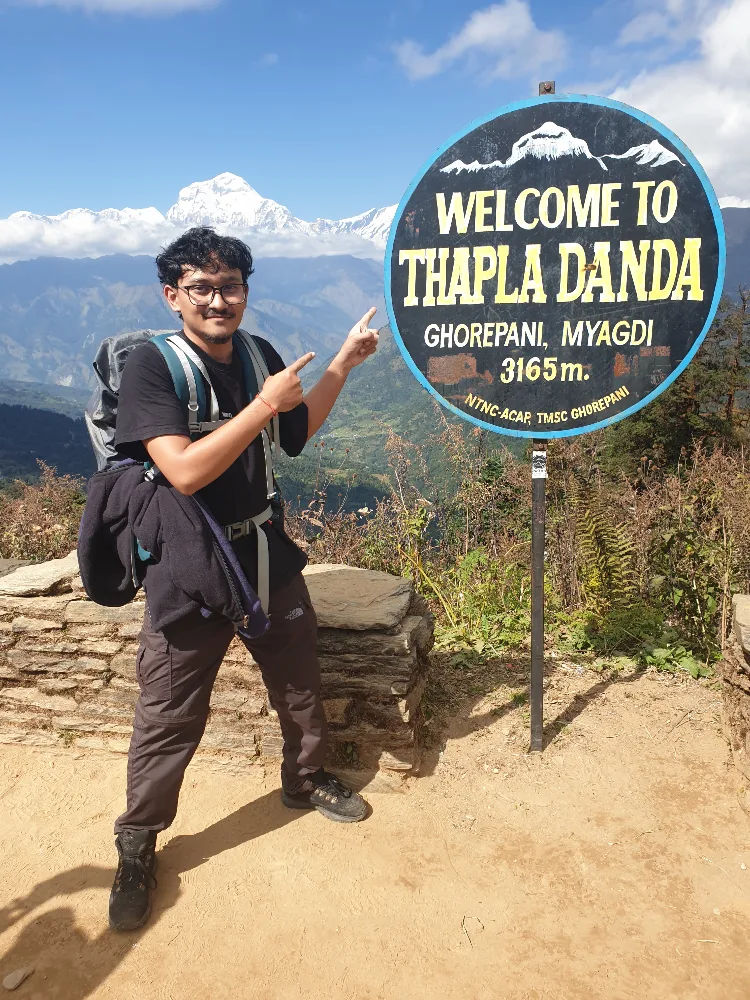
Day 5: Ghorepani to Poon Hill (3,210m) to Hile (1,480m) to Pokhara
Here's the second chance. Wake early again, yes, two sunrise starts in a row, and climb the familiar stone steps to Poon Hill for the classic Annapurna panorama. Then descend through rhododendron forest to Hile, and drive back to Pokhara.
The Two-Chance Advantage: Why This Route Makes Sense
Most treks give you one shot at a sunrise viewpoint. If the clouds roll in, you climb in the dark, see nothing, and walk away with a story about what might have been.
The Muldai route is different because it stacks two viewpoints back to back:
Muldai first, Poon Hill second
Muldai is higher (3,637m vs 3,210m), quieter, and arguably offers a better panorama. But it's also more exposed to weather, and the pre-dawn climb is steeper. If the morning is clear, you've seen the best of what this ridge has to offer before most trekkers have even reached Ghorepani. If the morning is cloudy, you haven't lost anything, you still have Poon Hill the next day.
Poon Hill as the backup
Poon Hill is lower, more accessible, and sits slightly further from the highest peaks. But it's also more sheltered in some weather patterns, and the view is genuinely spectacular in its own right. If Muldai is clouded out, Poon Hill gives you a second chance at the same sunrise experience.
Or do both, and compare
Some trekkers climb Poon Hill on the morning after Muldai and find they prefer one over the other. Muldai feels wilder, more remote, less polished. Poon Hill feels like a shared ritual, with dozens of people watching the same light hit the same peaks. Neither is wrong. Having both in a single itinerary lets you decide for yourself.
The practical point: you don't have to choose between the famous viewpoint and the quiet one. The standard route gives you both, on consecutive mornings, with a night at Ghorepani in between.
What Makes Muldai Different
The crowds. Or rather, the lack of them.
Poon Hill is a victim of its own success. Muldai offers a similar quality of view without the elbow-to-elbow sunrise experience. If you've ever felt disappointed by a famous viewpoint because of the number of people around you, Muldai is the antidote.
The final climb
The walk from Dobato to the viewpoint is short but steep, with some rugged sections. It's not technical, no scrambling or exposed traverses, but it will get your heart rate up, especially in the pre-dawn cold.
The swing
Yes, there's a swing at the top. One recent visitor described it as "one of the top viewpoints for the Dhaulagiri and Annapurnas" and noted a local guy serving hot beverages up there. It's a small detail, but it says something about the character of the place: unpolished, a little quirky, not trying too hard.
The trail itself
The route through Ghandruk, Tadapani, and Dobato passes through Gurung villages and rhododendron forests without the density of lodges and trekkers you'll find on the Annapurna Base Camp trail. It feels like trekking used to feel.
Practical Information
Difficulty
Moderate. Suitable for beginners with basic fitness, though the final climb to the viewpoint is steep and the altitude (3,637m) is high enough to notice. The trail includes stone staircases and some rugged sections, but no technical terrain.
Best seasons
Spring (March to May) and autumn (September to November). Autumn brings clear skies and stable weather. Spring offers rhododendron blooms and milder temperatures. Winter is possible but cold, with a chance of snow at the viewpoint. Monsoon (June to August) brings rain, leeches on lower trails, and clouds that obscure the mountains.
Accommodation
Basic teahouses at Ghandruk, Tadapani, Dobato, and Ghorepani. Rooms are usually twin-share with shared bathrooms. Hot showers, charging, and boiled or filtered water are available at most stops for a small extra fee. Dobato's teahouses are the most basic, expect simple facilities and limited menus.
Permits
Annapurna Conservation Area Project (ACAP) permit and TIMS card. Both are required and usually arranged through your trekking operator.
Altitude
The viewpoint sits at 3,637 meters. Altitude sickness risk is low to moderate because the ascent is gradual, but proper hydration and pacing matter. If you've been to similar altitudes before and felt fine, you'll likely be comfortable here. But respect the height regardless, headache and breathlessness are common at this elevation, especially if you've come from Pokhara (850m) in just a few days.
Muldai vs. Poon Hill: An Honest Comparison
Muldai Viewpoint vs Poon Hill: how they compare
| Muldai Viewpoint | Poon Hill | |
|---|---|---|
| Altitude | 3,637m | 3,210m |
| Crowds | Minimal | Heavy, especially at sunrise |
| View quality | 360-degree panorama, closer to Annapurnas | Classic panorama, slightly further from peaks |
| Access | Via Dobato (3,350m), 45 to 60 min climb | Via Ghorepani (2,874m), 45 to 60 min climb |
| Facilities at viewpoint | Tea tent, swing | Viewing platform, crowds |
| Best for | Quiet sunrise, fewer people, photography | Classic experience, easier access from Ghorepani |
Neither is "better." They serve different moods. And on this route, you don't have to choose. You get Muldai first, Poon Hill second, and two mornings of sunrise over the Annapurnas.
Who This Trek Is For
Beginners with basic fitness
The Muldai Trek doesn't require technical skills or prior high-altitude experience. If you can walk for several hours a day on uneven terrain, you can do this trek.
Trekkers short on time
Five days from Pokhara is manageable for most itineraries. It's a real Himalayan experience without the two-week commitment of the Annapurna Circuit or Base Camp.
Photographers
The sunrise from Muldai, with Annapurna South catching first light and Machhapuchhre silhouetted against the sky, is worth the early alarm. Fewer people means more room to set up a tripod and actually enjoy the moment. And if the light fails on Muldai, you have Poon Hill the next morning.
Anyone tired of the crowds
If you've been trekking in Nepal for a while and the guesthouses are starting to blur together, Muldai offers a quieter rhythm. Dobato has a handful of lodges, not a strip of them. Ghorepani, the next night, is busier, but by then you've already had your quiet sunrise.
The Honest Downsides
A few things worth knowing before you commit:
Dobato's teahouses are basic. Don't expect the comfort of Ghorepani or Ghandruk. The food is simple, the rooms are cold, and the bathrooms are shared.
The trail isn't as well-maintained as the main Annapurna routes. Some sections are rough, and signage is limited. A guide is recommended, especially for the Dobato to viewpoint section in the dark.
The view depends on weather. On a cloudy morning, you'll climb in the dark for an hour and see nothing but white. That's the risk. But on this route, the risk is softened by the fact that Poon Hill is waiting the next morning. Two chances, not one.
The Bottom Line
Muldai Viewpoint isn't a secret anymore. But it's still quiet enough to feel like one. It offers the Annapurna panorama without the Poon Hill procession, a short and steep climb to a genuinely stunning sunrise, and a trail that passes through villages and forests without feeling like a highway.
And unlike most viewpoints, this one comes with a backup. Walk to Muldai first. If the weather holds, you've seen something most trekkers miss. If it doesn't, climb Poon Hill the next morning and watch the same sun hit the same peaks from a different angle. Either way, you leave with a sunrise you'll remember.
If you'd like help figuring out whether Muldai fits your schedule, fitness level, or existing Annapurna itinerary, or if you want to combine it with Ghorepani, Poon Hill, or Khopra Ridge, Himkala Adventure can talk it through with you. They run treks in this region and can give you an honest answer about what the route demands and what you'll actually see. Reach out via WhatsApp (+977 9841376370) or email (himkalaadventure@gmail.com) to ask about dates, itinerary options, and current trail conditions.