Nepal is full of high mountains, deep valleys, and old villages that most trekkers never see. Some of the most beautiful parts of the country, places like Upper Mustang, Manaslu, and Nar Phu Valley, sit right along the border with Tibet (China). Because these areas are so close to the border, so remote, and so culturally sensitive, the Nepal government marks them as "restricted areas."
This doesn't mean they're closed. It means you can't just walk in on your own. You need a special permit called a Restricted Area Permit (RAP), a licensed guide, and a booking through a registered trekking agency. There are currently 15 restricted areas in Nepal, spread across 13 districts, all of them along the northern border.
Why Were These Areas Actually Restricted? The Real Story
Most travel blogs just say restricted areas exist "to protect culture and nature." That's part of it today, but it's not why the rule started. The real story goes back to the 1950s and 60s, and it's a lot more interesting than a conservation policy.
Tibet, and a group of fighters called the Khampas
In 1950, China took control of Tibet. In 1959, a major uprising in Tibet's capital, Lhasa, failed, and the Dalai Lama had to flee to India for safety. A group of Tibetan fighters, many of them from a region called Kham, refused to accept Chinese rule. They became known as the Khampas, and they kept fighting in the mountains, even after the Dalai Lama had left.
Because Nepal's Mustang district sits right against the Tibet border and was, at the time, one of the most remote and hard-to-reach places in the country (there wasn't even a road connecting it to the rest of Nepal), Khampa fighters set up a base there. From Mustang, they could cross into Tibet, fight, and retreat back into Nepal, where it was very difficult for anyone to reach or control them.
A foreign spy agency got involved
Here's the part most people don't know: during this period, the United States, through the CIA, secretly helped train, arm, and fund the Khampa fighters. This was part of the Cold War, a time when the US and China were on opposite sides of world politics. Fighters were flown to the US for training and then dropped back into Mustang with weapons and supplies. At one point, thousands of fighters were based there, all operating from inside Nepal, without Nepal's government having full control over what was happening on its own land.
Why it all changed in 1974
Around 1972, relations between the US and China started to improve. Once that happened, the US no longer wanted to support fighters working against China, so American support stopped. But the Khampa fighters were still in Mustang, still armed, and China began pressuring Nepal to remove them, since having an armed foreign group operating from Nepali soil against a neighboring country was a serious problem for Nepal's relationship with China.
In 1974, Nepal's government sent the army into Mustang to peacefully disarm the fighters. The Dalai Lama even recorded a message asking them to hand over their weapons instead of fighting Nepali soldiers. After a tense standoff, most fighters surrendered or left for India, and the operation was over by the end of the year.
Why Nepal kept these areas closed afterward
After this happened, Nepal decided to keep Mustang, and other similarly sensitive areas along the Tibet border, closed off to outsiders entirely. This wasn't only about what had just happened with the Khampas. It was also about making sure nothing like it could happen again, protecting Nepal's careful, neutral relationship with both India and China, and giving the government a way to keep an eye on who was moving through these remote, hard-to-monitor border regions. Protecting local culture and fragile mountain environments became part of the reasoning too, but the border security concern came first.
When Did Nepal Start Opening These Areas to Trekkers?
For close to two decades, these border areas stayed closed to almost everyone. That began to change after 1990, when Nepal shifted from an absolute monarchy to a multi-party democracy, and the government started looking at tourism as a way to bring income into these remote regions.
Upper Mustang, the most famous of these "forbidden kingdoms," officially opened to foreign trekkers in March 1992. It was allowed to open, but with a high permit fee and a strict cap on visitor numbers, so the government could still control how many outsiders came through and use some of that money for conservation and local development. That same basic model, special permit, controlled numbers, guide required, is still how restricted areas work today.
Other regions opened gradually over the years that followed: Manaslu in the early 1990s, Nar Phu Valley in 2002, Tsum Valley in 2008, and so on, each one following that same pattern.
Why Restricted Areas Still Require Permits Today
The original security concern from the 1970s isn't really the reason anymore, but the permit system stuck around because it turned out to be useful for several other reasons:
Safety: These areas are remote, high-altitude, and thinly populated. A permit system means the government and your agency know exactly who is in these regions and where.
Culture: Many of these valleys have small, traditional communities that have kept their way of life largely unchanged for centuries. Controlled tourism helps protect that instead of overwhelming it.
Environment: High-altitude ecosystems are fragile. Limiting numbers helps prevent damage to trails, water sources, and wildlife.
Border sensitivity: These regions still sit directly on an international border, so some level of monitoring remains standard practice, the same as it would be in most countries.
The Complete List of Restricted Areas in Nepal (2026 Permit Fees)
There are 15 official restricted areas across Nepal, each with its own permit fee. Fees are charged per person, and most are priced per week with an extra daily charge if you stay longer.
| Restricted Area | District | Permit Fee |
|---|---|---|
| Upper Mustang | Mustang | USD 500 (first 10 days) + USD 50/day after |
| Upper Dolpo | Dolpa | USD 500 (first 10 days) + USD 50/day after |
| Manaslu | Gorkha | USD 100/week (Sep-Nov) or USD 75/week (Dec-Aug) + daily rate after |
| Tsum Valley | Gorkha | USD 40/week (Sep-Nov) or USD 30/week (Dec-Aug) + USD 7/day after |
| Nar Phu Valley | Manang | USD 100/week (Sep-Nov) or USD 75/week (Dec-Aug) + daily rate after |
| Humla | Humla | USD 50/week + USD 10/day after |
| Lower Dolpo | Dolpa | USD 20/week + USD 5/day after |
| Gosaikunda (Rasuwa) | Rasuwa | USD 20/week |
| Solukhumbu (Ward 5) | Solukhumbu | USD 20 (first 4 weeks) + USD 25/week after |
| Sankhuwasabha (Makalu) | Sankhuwasabha | USD 20/week (first 4 weeks) + USD 25/week after |
| Taplejung | Taplejung | USD 20/week (first 4 weeks) + USD 25/week after |
| Dolakha | Dolakha | USD 20/week |
| Mugu | Mugu | USD 100/week + USD 15/day after |
| Bajhang | Bajhang | USD 90/week + USD 15/day after |
| Darchula | Darchula | USD 90/week + USD 15/day after |
Prices can change, so always confirm current fees with your trekking agency before booking.
Big Update: Solo Trekkers Can Now Get Restricted Area Permits (March 2026)
For a long time, one of the most frustrating rules in Nepal trekking was this: even a single, experienced solo trekker could not get a Restricted Area Permit alone. You needed at least two foreign trekkers on the same application, which meant solo travelers often had to delay their trip or find a stranger to team up with just to satisfy the paperwork.
That rule changed on March 22, 2026. Nepal's Department of Immigration officially removed the two-person minimum. Solo foreign trekkers can now apply for a Restricted Area Permit on their own.
A few things to know about what did and didn't change:
What's new: Solo trekkers can now hold a Restricted Area Permit individually, no second trekker required.
What hasn't changed: You still need a licensed Nepali guide and a booking through a registered trekking agency. Independent, guideless trekking in restricted areas is still not allowed.
Group size limit: Groups can now include up to 7 trekkers under a single guide.
Application: Permits can now be pre-applied for online using your visa submission details, before you even land in Nepal.
This is genuinely one of the biggest changes to Nepal trekking rules in years, especially for solo travelers who previously had no way around the two-person rule.
Who Needs a Restricted Area Permit?
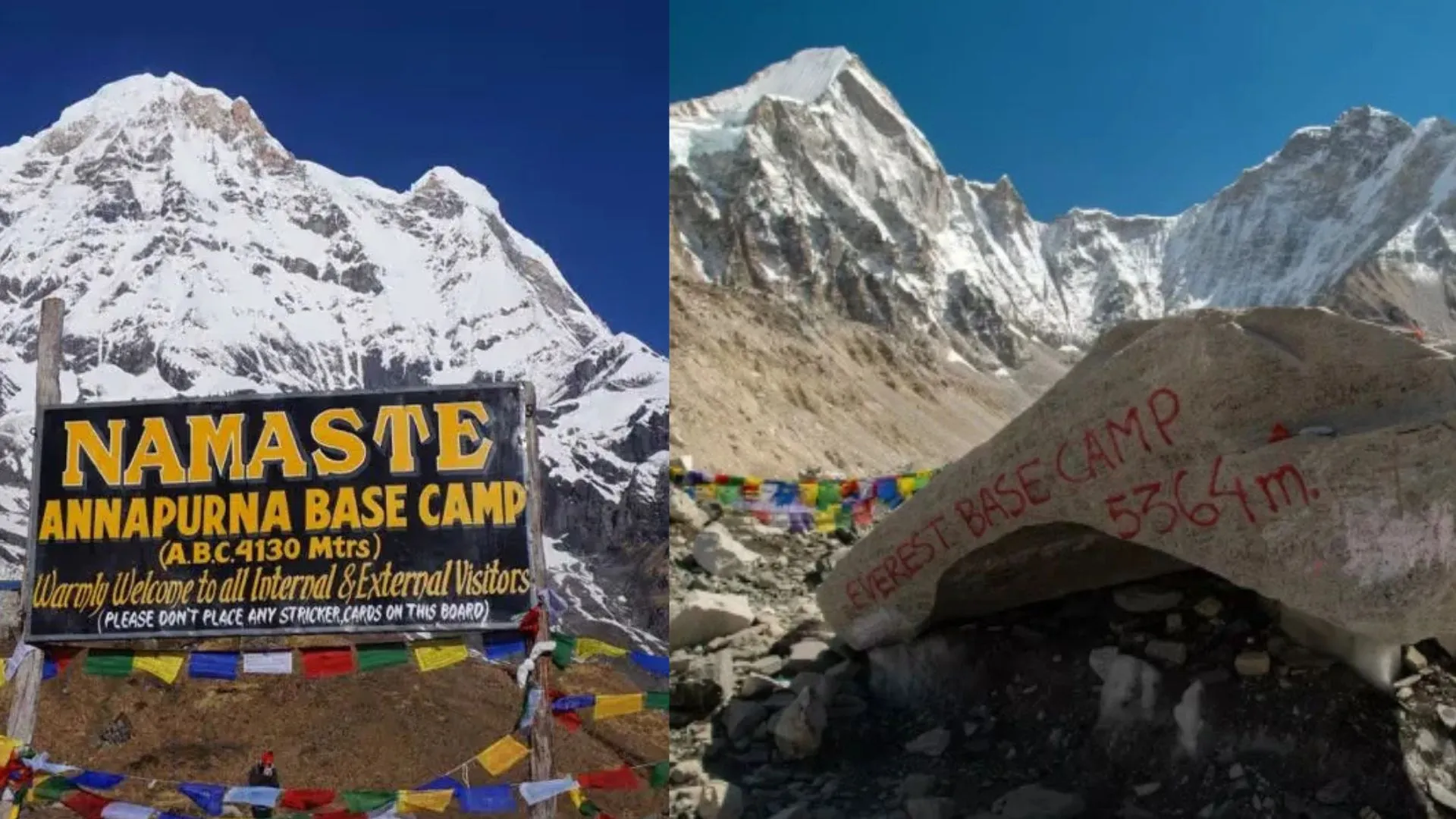
Any foreign national trekking in one of the 15 restricted areas listed above needs a RAP, in addition to any other required permits, such as the Annapurna Conservation Area Permit (ACAP) or the Manaslu Conservation Area Permit, depending on the region. Popular treks like Everest Base Camp, Annapurna Circuit, and Langtang Valley are not restricted areas, so trekkers there generally only need a conservation area or TIMS permit, not a RAP.
How to Get a Restricted Area Permit
RAPs can only be issued through a registered trekking agency in Nepal, applying to the Department of Immigration in Kathmandu on your behalf. You cannot apply for one yourself directly. Your agency will typically need:
A copy of your passport
A copy of your valid Nepal visa
Your planned trekking itinerary for the restricted area
Proof of travel insurance covering high-altitude trekking
The agency's own registration and guarantee documents
A good agency handles all of this for you and usually has your permit ready within a day or two.
Rules to Follow in Restricted Areas
A few things to remember once you're inside a restricted area:
Always trek with your licensed guide, this is mandatory, not optional.
Carry your permit with you at all times; you may be asked to show it at checkpoints.
Stick to the approved route listed on your permit; you can't freely change your itinerary once inside.
Respect local customs, ask before photographing people or entering monasteries and homes.
Make sure you have valid travel insurance that covers high-altitude rescue.
Frequently Asked Questions
Why are some areas in Nepal restricted for trekkers?
Originally, it was mainly about national security along the sensitive Tibet border, following the Khampa resistance period in the 1960s and 70s. Today, it's mostly about protecting remote cultures, fragile high-altitude environments, and keeping trekkers safe in areas with very limited infrastructure.
When did Nepal start allowing trekkers into restricted areas?
Upper Mustang, the most well-known restricted area, opened to trekkers in March 1992. Other regions like Manaslu, Nar Phu, and Tsum Valley opened gradually over the following years and decades.
Can I trek in a restricted area without a guide?
No. A licensed guide and a booking through a registered trekking agency are mandatory in every restricted area, even after the 2026 solo permit rule change.
Can I trek Nepal's restricted areas alone now?
Yes, as of March 2026, solo trekkers can hold a Restricted Area Permit individually. You still need a licensed guide and a registered agency; you just no longer need a second trekker on the permit.
How much does a Restricted Area Permit cost?
It depends on the region. Fees range from around USD 20 per week for areas like Gosaikunda and Dolakha, up to USD 500 for the first 10 days in Upper Mustang and Upper Dolpo.
Which popular treks are NOT restricted areas?
Everest Base Camp, Annapurna Circuit, and Langtang Valley are open trekking regions and don't require a RAP, though they do require their own conservation area permits.
Planning a Restricted Area Trek?
Restricted area permits, guide arrangements, and route planning can be confusing to sort out on your own, especially with the 2026 rule changes still new. At Himkala Adventure, we specialize in the Nar Phu Valley Trek, the Manaslu Circuit Trek, and the Manaslu Circuit with Tsum Valley extension, and we handle the full permit process for each of them, so you can focus on the trek itself, not the paperwork.
Get in touch and we'll take care of the rest.